
Best Dry Bags for Water Sports in 2026: Kayaking, SUP and Rafting Buying Guide
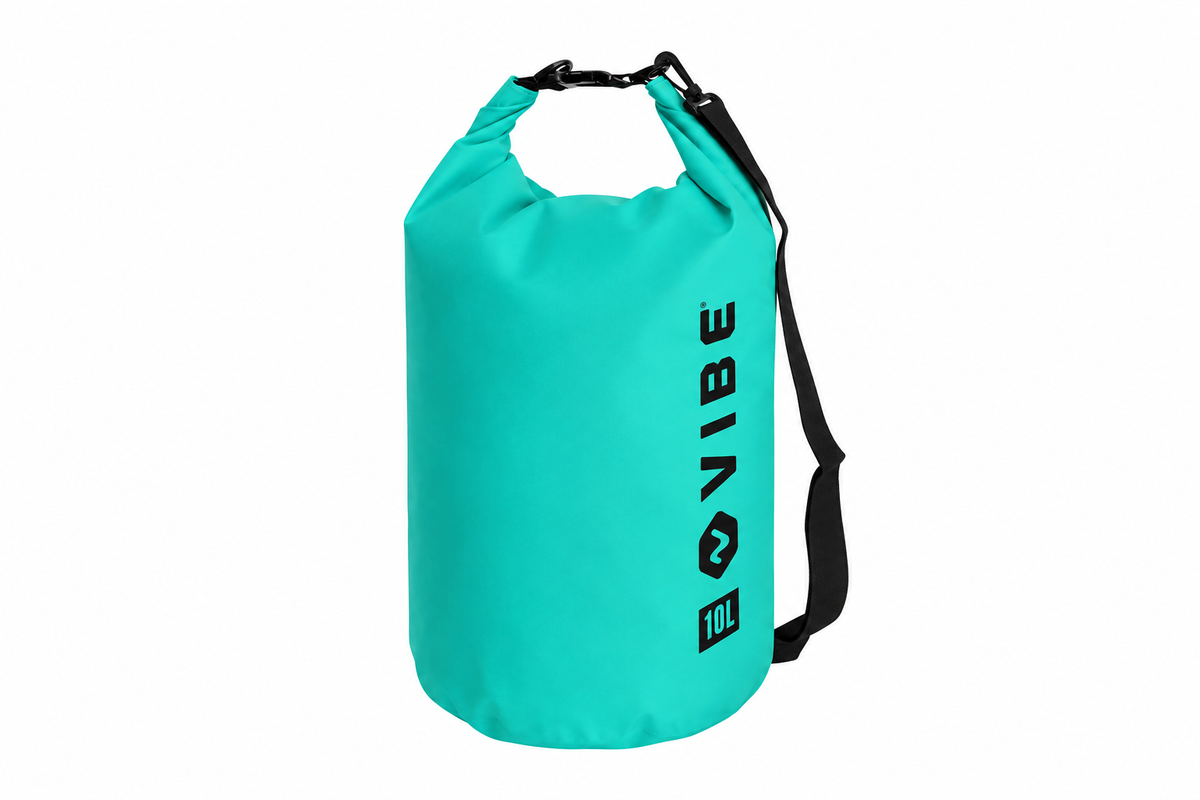
If you have ever pulled a soaked phone, a damp sleeping bag, or a waterlogged wallet out of your kayak hatch, you already understand why dry bags for water sports are not optional gear. They are the single cheapest way to protect everything you care about on a paddle, from your car keys to your camera. At Vibe Kayaks, we build and test dry bags for kayaking, paddleboarding, and rafting so you can spend less time worrying about your gear and more time on the water. This guide breaks down what actually makes a dry bag waterproof, how to pick the right size and style, and which Vibe dry bags fit your next trip.
Why Dry Bags for Water Sports Matter More Than You Think
Splashes, rain, capsizes, and wet launches are part of paddling. A dry bag creates a sealed, submersible barrier between your gear and the water, which matters whether you are:
-
Kayak fishing and carrying electronics, tackle, or a first aid kit
-
Paddleboarding to a sandbar or island for the day
-
Whitewater rafting through rapids where a dunking is likely
-
Kayak camping and need to keep a sleeping bag, clothes, and food dry overnight
Beyond keeping items dry, most quality dry bags also float, which means a dropped bag becomes a recoverable one instead of a lost one.
What Makes a Dry Bag Actually Waterproof
Not every "waterproof" bag performs the same way once it hits real water. Two things drive performance: the closure and the material.
1. Roll Top Dry Bag Closures Explained
A roll top dry bag is the industry standard for a reason. You fill the bag, squeeze out excess air, fold the top down three or more times, and clip the buckle. Each fold adds another layer of protection, so the more you roll, the better the seal. This simple design has no zippers to fail and works reliably even with cold, wet hands.
2. Material and Waterproof Ratings to Look For
Look for heavy denier nylon or PVC fabric with welded or taped seams, since stitched seams alone can let water through. Ratings like IPX8 indicate a bag can handle full submersion, not just splashes, which is worth knowing before you buy a bag for whitewater or open water paddling.
Best Dry Bag for Kayaking: What to Look For
The best dry bag for kayaking depends on your hatch space, trip length, and what you are packing. When comparing options, prioritize:
-
Abrasion resistant fabric that can handle being wedged into a kayak hatch or dragged across a launch point
-
A roll top or welded seam closure for a reliable seal
-
A grab handle or D ring so you can clip it to deck rigging or a paddleboard bungee
-
The right capacity for your trip, since an oversized bag wastes hatch space and an undersized one means packing multiple bags
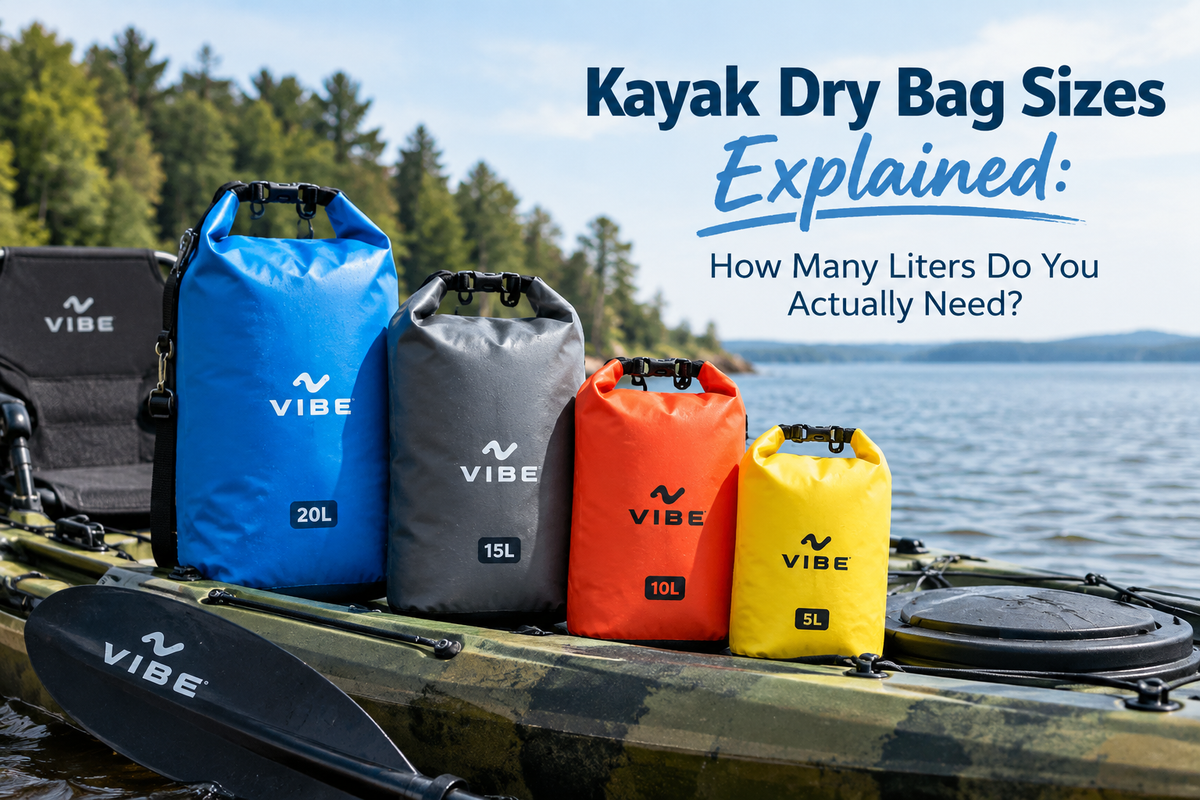
Vibe Kayaks offers a simple, size based lineup built for exactly this: the Vibe 10L Dry Bag for day trip essentials like a wallet, keys, and snacks, the Vibe 25L Dry Bag for a change of clothes and camera gear, and the Vibe 35L Dry Bag for overnight kayak camping trips. For phones specifically, the Vibe Cell Phone Dry Bag keeps your screen usable while sealed.
Choosing a Dry Bag for Paddleboarding
A dry bag for paddleboarding has slightly different needs than one for a kayak hatch. Since SUP storage is usually an exposed deck bungee rather than an enclosed compartment, look for a compact, low profile bag in the 5L to 10L range that straps down securely and will not throw off your balance. A smaller waterproof dry bag for kayaking day trips, like the Vibe 10L, doubles well as a SUP bag for phones, sunscreen, and snacks.
Sizing for Kayaking, SUP, and Rafting
-
5L to 10L: Phone, wallet, keys, snacks, sunscreen for short paddles
-
15L to 25L: Change of clothes, camera, lunch, first aid kit for day trips
-
30L and up: Sleeping gear, clothing, and food for overnight kayak or raft camping trips
Caring for Your Dry Bag
Rinse your bag with fresh water after saltwater use, let it air dry fully before storing it, and avoid folding it at the same crease every time to prevent wear along the seams. A well maintained dry bag can last for years of regular paddling.
Frequently Asked Questions
1. Are dry bags actually waterproof, or just water resistant?
A true dry bag with a roll top closure and welded seams is fully waterproof and can handle submersion, not just splashes. Always check for an IPX rating or "submersible" claim before assuming a bag can handle a capsize.
2. What size dry bag do I need for kayaking?
For a short day trip, a 10L bag is usually enough for a phone, keys, and snacks. For a full day out, 25L covers clothing and a camera. For overnight kayak camping, 35L or larger is more practical.
3. Can I use a kayak dry bag for paddleboarding too?
Yes, Smaller dry bags in the 5L to 10L range work well for both kayaking and paddleboarding, since they strap easily to deck rigging or a SUP bungee.
4. How do I properly seal a roll top dry bag?
Push out excess air, roll the top down at least three full times before buckling. The more folds you make, the stronger the waterproof seal.
5. Do dry bags float if they fall overboard?
Most quality dry bags, including sealed Vibe dry bags, float when properly closed with trapped air, making a dropped bag much easier to recover.

 30 days money back guarantee
 Secure and certified online shop
 1000+ Happy customers