
Kayaking Safety Tips for Travelers: 12 Essentials Before Your Trip
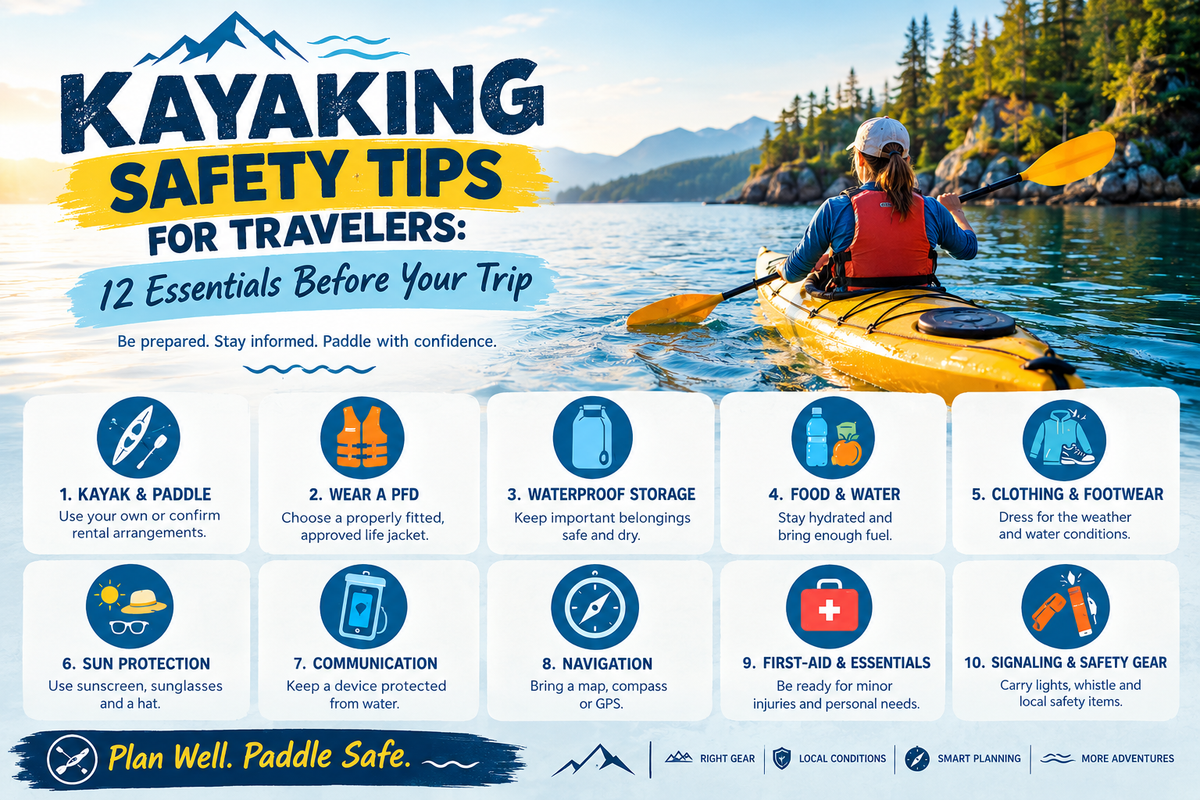
Kayaking safety tips for travelers begin with understanding your destination, checking local conditions, and choosing a route that matches your experience. Whether you are exploring a peaceful lake or visiting a coastal destination, preparation makes a significant difference. As kayak tourism continues to attract outdoor travelers, knowing how to paddle responsibly is an essential part of planning a memorable vacation.
Why Kayak Travel Safety Matters
Unlike paddling on familiar local waters, kayaking while traveling introduces new challenges. Unfamiliar launch points, changing weather, currents, wildlife, and limited emergency access can affect your experience.
Even experienced paddlers should research local conditions before arriving. A beautiful destination isn't necessarily suitable for every skill level.
12 Essential Kayaking Safety Tips for Travelers
1. Research Your Destination Before Traveling
Understand the type of water you'll encounter, available launch points, seasonal restrictions, and potential hazards. When comparing the best kayaking destinations in the USA, prioritize locations that match your paddling experience rather than choosing based on scenery alone.
2. Check Weather and Water Conditions
Review wind speed, thunderstorms, currents, tides, and water temperatures before departure. Use the National Weather Service for current forecasts and alerts. Check conditions again immediately before launching.
3. Always Wear a Properly Fitted PFD
Wear an appropriate, properly fitted personal flotation device (PFD) throughout your trip. Even confident swimmers can struggle in cold water, strong currents, or unexpected conditions.
4. Choose a Beginner-Friendly Route
If you're unfamiliar with the destination, start with a sheltered, manageable route. Avoid exposed coastlines, difficult river sections, and long crossings until you have the necessary training and experience.
5. Share Your Float Plan
Tell someone where you're launching, your intended route, and when you expect to return. Include emergency contact information and instructions for what to do if you're overdue.
6. Inspect Your Kayak and Equipment
Check your kayak for damage, confirm that equipment is secured, and inspect your paddle and PFD. Ensure your combined body weight and cargo remain within the manufacturer's stated capacity.
7. Protect Your Communication Devices
Carry a phone in waterproof protection, but don't assume cellular coverage will be available. Remote destinations may require additional communication or signaling equipment appropriate to the route.
8. Understand Local Regulations
Research permits, access restrictions, wildlife protection rules, and applicable boating requirements. The National Park Service's paddling resources provide a useful starting point when visiting participating park destinations.
9. Dress for Water Temperature
Air temperature alone doesn't determine what you should wear. Cold water can be dangerous even on sunny days. Choose clothing and immersion protection appropriate to the expected conditions.
10. Pack Emergency Essentials
Carry drinking water, a signaling device, basic first-aid supplies, navigation equipment, and weather-appropriate clothing. Keep essential items accessible rather than buried beneath your luggage.
11. Know Your Limits
Avoid pushing yourself to complete a planned route when fatigue, changing weather, or difficult conditions increase the risk. Turning back early is better than continuing into unsafe water.
12. Consider Guided Kayaking Tours
A qualified local guide can help beginners understand unfamiliar waterways, equipment, and environmental conditions. Guided excursions can be particularly useful when planning your first kayaking vacation.
Essential Kayaking Safety Equipment Checklist
Before traveling, prepare these essentials:
- Properly fitted PFD and suitable paddle.
- Whistle or appropriate signaling device.
- Waterproof communication protection.
- Drinking water and sun protection.
- First-aid supplies and navigation tools.
- Weather-appropriate clothing.
- Trip-specific rescue and emergency equipment.
Overnight travelers should also secure their supplies against water exposure. Proper dry-bag packing for multi-day kayak trips can help protect essential clothing, food, and equipment.

Kayaking Safety Considerations for Different Waterways
Different environments require different precautions.
|
Waterway |
Important safety considerations |
|
Lakes |
Wind, cold water, changing waves, and distance from shore |
|
Rivers |
Currents, submerged obstacles, water levels, and safe exit points |
|
Coastal waters |
Tides, marine traffic, waves, and changing weather |
|
Remote waterways |
Navigation, communication limitations, and emergency access |
Choose your route based on actual conditions and your abilities, not simply the distance shown on a map.
Quick Pre-Launch Kayaking Safety Checklist
Before entering the water, confirm that:
- The latest weather and water conditions are suitable.
- Your route and alternative landing points are identified.
- Your PFD fits correctly and your equipment is secure.
- Someone knows your float plan and expected return time.
- You have sufficient supplies and a reliable emergency plan.
If conditions exceed your abilities, postpone the trip.
Plan a Safer Kayaking Adventure
A successful kayaking vacation starts before you reach the water. Research your destination, prepare your equipment, respect local conditions, and choose a kayak suited to your intended activities.
For future trips, explore the Vibe Kayaks collection to compare recreational and fishing kayaks based on your paddling needs.
Questions fréquemment posées
1. Is kayaking safe for beginners on vacation?
Yes, beginners can enjoy kayaking when they choose sheltered waterways, suitable weather, properly fitted safety equipment, and routes that match their abilities. Guided trips are often a practical starting point.
2. What is the most important kayaking safety rule?
Wear an appropriate, properly fitted PFD. Combine this with checking local conditions, understanding your route, and avoiding water that exceeds your experience.
3. Should I kayak alone while traveling?
Paddling with a suitable companion or qualified guide is generally preferable, particularly in unfamiliar areas. Solo trips require additional experience, preparation, and emergency planning.
4. What should I do if the weather changes while kayaking?
Assess conditions immediately and head toward a safe landing point when appropriate. Don't continue toward your original destination simply to complete the planned route.
5. What safety equipment should I bring for kayaking?
Start with a PFD, paddle, signaling device, drinking water, communication equipment, navigation tools, and suitable clothing. Additional equipment depends on your destination and conditions.

 Satisfait ou remboursé sous 30 jours
 Boutique en ligne sécurisée et certifiée
 Plus de 1000 clients satisfaits