
Dry Bag vs Dry Box for Kayak Fishing: Which Do You Actually Need?
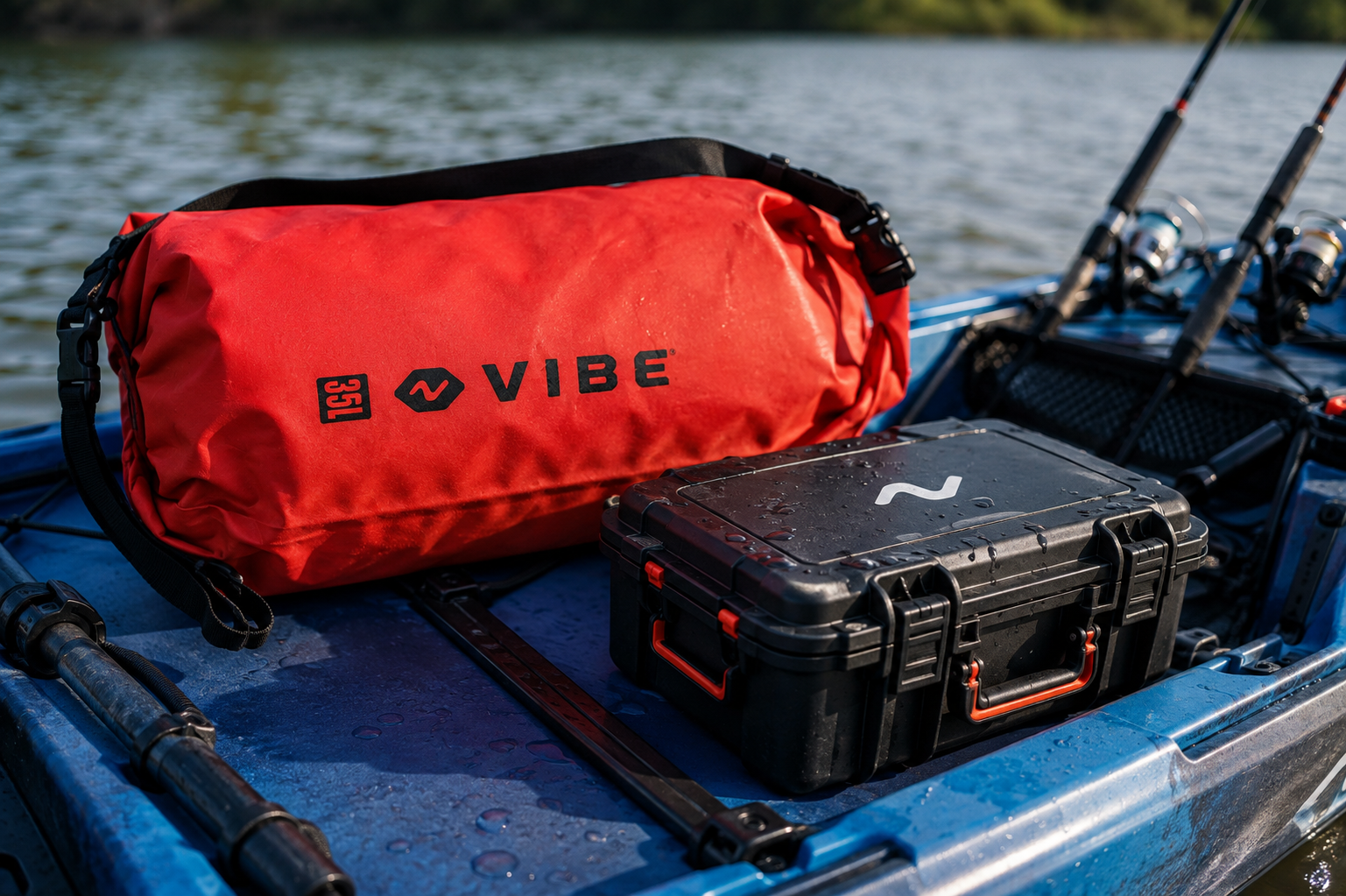
For most kayak anglers, a dry bag and a dry box aren't competing choices. They solve different problems, and the strongest setups on the water usually carry both. A dry bag is a soft, roll top sack that seals by rolling and clipping the opening, ideal for clothing, phones, and bulkier soft goods. A dry box is a rigid, hinged, gasket sealed container built to protect items from crushing and impact, not just water, which makes it the better choice for electronics, tackle, and anything fragile.
This guide breaks down how each one actually performs on a fishing kayak, where they overlap, and where one clearly beats the other, so you can build a storage setup instead of guessing.
What a Dry Bag is Built For
A dry bag is a flexible sack made from coated nylon, PVC, or TPU, sealed with a roll top closure and buckle. It's lightweight, packs flat when empty, and compresses down as you use up the space inside, which makes it easy to stuff into a hatch or bungee to a deck. For a full breakdown of sizing and material choices, see our guide to choosing the right kayak dry bag.
Dry bags are the right call for clothing layers, towels, food, and bulk gear that doesn't need rigid protection. They're also cheap enough that most paddlers carry two or three sizes rather than one.
Where dry bags fall short is impact protection. A rolled top seals out water reliably, but the soft shell offers little defense if a bag gets stepped on, dropped, or crushed under other gear. A phone or a reel packed loose in a dry bag can still come out scratched or cracked even though it stayed completely dry.
What a Dry Box Is Built For
A dry box is a hard sided container, usually polypropylene or ABS plastic, with a rubber gasket seal and latching or hinged lid. Where a dry bag manages water, a dry box manages water and impact together. That combination is why dry boxes are the standard choice for cameras, phones, tackle, first aid kits, and anything you'd rather not find crushed at the bottom of a hatch.
Dry boxes also organize better than bags. Many use foam dividers or removable trays, so tackle stays sorted by type or size instead of loose in a sack. The tradeoff is that a dry box takes up a fixed amount of space whether it's full or empty, and a hard shell adds weight a soft bag doesn't carry.
Dry Bag vs Dry Box: Quick Comparison
1. Water protection:
Both are fully waterproof when sealed correctly. A dry bag depends on rolling the top down at least three times before clipping it shut. A dry box depends on the gasket seating evenly and the latch closing fully.
2. Impact protection:
A dry box wins clearly here. The rigid shell protects contents from drops, crushing, and other gear shifting on top of it. A dry bag offers no meaningful impact protection on its own.
3. Storage flexibility:
A dry bag wins here. It compresses when partially full and packs into odd shaped spaces like a bow hatch or tank well. A dry box holds its shape and size regardless of how much is inside.
4. Best contents:
Dry bags suit clothing, towels, food, and soft bulk gear. Dry boxes suit phones, cameras, electronics, tackle, and anything that needs to survive a hard bump as much as a splash.
5. Weight and packability:
A dry bag is lighter and folds flat when not in use. A dry box is bulkier and keeps its shape even when empty, so it takes up the same hatch space whether it's full or nearly empty.
Why Most Kayak Anglers Use Both
On a fishing kayak, gear falls into two categories: things that just need to stay dry, and things that need to stay dry and intact. Trying to cover both needs with one type of container usually means compromising on one side or the other.
A practical setup looks like this. A small dry bag in the cockpit or tank well for a rain layer, snacks, and a towel. A dry box mounted or wedged in a hatch for a phone, keys, and a first aid kit. And dedicated tackle storage for hooks, lures, and terminal tackle, since loose gear in either a bag or a box tends to end up tangled regardless of how well it's sealed.
If your kayak has a sealed hatch, that's the natural home for a dry box, since the rigid shell benefits from a protected, enclosed space rather than sitting exposed on deck. Our guide to kayak hatches and hatch covers covers how to check that your hatch seal is actually holding before you trust it with anything valuable.
How to Decide What You Need
Start with what you're protecting, not the container itself. If it's soft goods, clothing, or food, a dry bag is lighter, cheaper, and packs better. If it's anything electronic, a camera, or gear you can't afford to have cracked, a dry box is worth the extra bulk and cost. Most anglers who fish regularly end up owning both, using the bag for volume and the box for anything fragile or expensive.
Browse Vibe's full dry bag lineup for soft storage, or check out tackle storage for organizing gear that needs both protection and structure.
Questions fréquemment posées
1. Can a dry box replace a dry bag entirely?
Not usually. A dry box has a fixed, relatively small interior, so it isn't practical for bulkier items like clothing or towels. Most anglers use a dry box for fragile or valuable items and a dry bag for everything else.
2. Is a dry box heavier than a dry bag?
Yes, the rigid shell and gasket seal add weight compared to a soft roll top bag, and a dry box keeps that weight and shape even when it's empty.
3. Do I need a dry box if my kayak already has sealed hatches?
A sealed hatch keeps water out of the compartment, but it doesn't protect contents from impact if gear shifts around inside. A dry box inside a hatch adds a second layer of protection for anything fragile.
4. What should never go in a dry bag alone?
Cameras, phones without a dedicated waterproof case, and anything else that can be damaged by crushing or impact are safer in a dry box, even though a dry bag would keep them equally dry.
 Satisfait ou remboursé sous 30 jours
 Boutique en ligne sécurisée et certifiée
 Plus de 1000 clients satisfaits