
Best Kayak Bags: How to Choose the Right Kayak Dry Bag
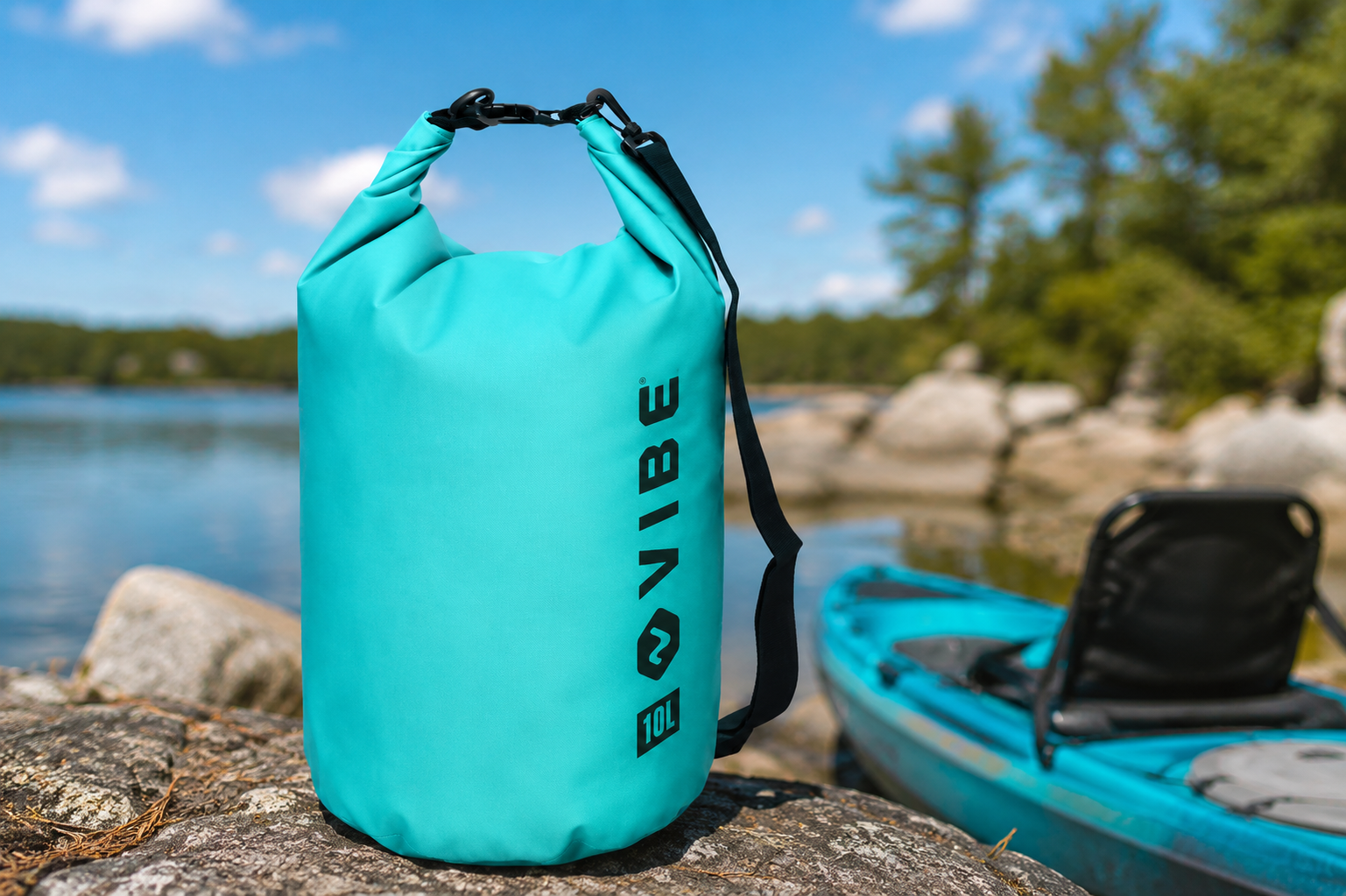
Kayak bags, better known as dry bags, are roll-top, waterproof storage sacks made from coated nylon, PVC, or TPU. They seal out water when the top is rolled down at least three times and clipped shut. They are the simplest way to keep phones, wallets, clothing, and camping gear dry on a kayak, where a wave, a splash, or a full capsize is never far off.
If you have ever pulled a soggy phone or a waterlogged sandwich out of a "waterproof" backpack, you already know why paddlers don't leave the launch without at least one dry bag clipped to the deck.
Why You Need a Dedicated Dry Bag for Kayaking
A kayak sits low in the water, has open cockpits or hatches, and gets wet from spray, rain, and the occasional wake. These are conditions a regular backpack or duffel simply isn't built for. A proper dry bag for kayaking does three jobs a normal bag can't.
It keeps gear dry even when submerged. A correctly rolled dry bag can survive being dunked, not just splashed.
It floats. Air trapped inside most dry bags gives them buoyancy, so a bag that comes loose doesn't sink your keys or your camera to the bottom of the lake.
It compresses and lashes down. Roll-top closures let you squeeze out excess air for a smaller, more secure package that's easy to bungee to a deck or tuck into a hatch.
How to Choose the Right Kayak Bag
Picking the right kayak dry bag comes down to three questions. How much do you need to carry? How wet will the trip get? Where will the bag actually ride on your kayak?
1. Match the Size to Your Trip
Dry bags are sized in liters, and matching capacity to your outing keeps gear organized instead of stuffed into one oversized sack.
A small bag in the 5 to 10 liter range suits phones, keys, wallets, sunscreen, and a light snack, basically anything you want within reach in the cockpit. Vibe's 10L dry bag is built for exactly this kind of everyday carry. A mid-size bag around 20 to 25 liters, like the 25L dry bag, handles a half day of gear, including a change of clothes, a rain layer, lunch, tackle, and a first-aid kit. A large bag in the 30 to 35 liter range is built for full-day or overnight trips, holding camping layers, extra clothing, and bulkier gear that needs to stay dry in the tank well or a rear hatch.

Many paddlers run two sizes at once: a small bag for essentials they can reach mid-paddle, and a larger bag stowed for the trip's full gear load.
2. Check the Waterproof Rating and Material
Not every bag labeled "water-resistant" is truly submersion-proof, so it's worth checking a few details before you buy. Coated ripstop nylon or PVC and TPU construction resists abrasion from repeated loading and UV exposure from sun on the water. Welded or taped seams matter more than stitched ones, since stitching creates needle holes that a stitched-only bag can leak through over time. A roll-top closure with a buckle is what actually creates the waterproof seal, not the fabric alone, so pay attention to how the top closes rather than just the material it's made from.
3. Think About How It Attaches to Your Kayak
A dry bag only helps if it stays put. Look for a bag with a welded D-ring or clip point so it can be bungeed to deck rigging, clipped to a leash point, or secured inside a tank well instead of rolling around loose, where a wake or a hard brace can knock it overboard.
Kayak Dry Bag Sizes at a Glance

For the full lineup, including the 35L option built for overnight loads, see Vibe's complete dry bag sizes.

Caring for Your Kayak Dry Bag
A dry bag's seal is what keeps it working, so a few simple habits protect it for years of trips. Rinse it with fresh water after every saltwater trip to keep salt from breaking down seams and buckles. Let it air dry fully before storing it to prevent mildew inside the bag. Roll the top at least three full times before clipping it shut, since that's what actually forms the waterproof seal rather than the buckle alone. And avoid overpacking, which stresses the seams and makes a clean roll-top seal harder to form.
If you're also organizing tackle or fishing gear for the trip, pairing a dry bag with dedicated tackle storage keeps hooks and lures separate from clothing and electronics.
Shop Kayak Bags Built for the Water
Vibe's dry bag lineup covers the full range paddlers actually use on the water, sized for everything from a quick paddle to an overnight trip. Browse the full Dry Bags collection to find the right size, or check out Kayak Storage for more ways to keep your gear organized on and off the water.
Questions fréquemment posées
1. Are kayak dry bags actually 100% waterproof?
A properly rolled dry bag with welded seams and a buckled roll-top closure is fully submersion-proof for short periods. The seal depends on rolling the top down at least three times before clipping it shut. An unrolled or partially rolled bag will leak.
2. What size dry bag do I need for a day trip on a kayak?
A 20 to 25 liter dry bag comfortably fits a change of clothes, a rain layer, lunch, and small gear for a half-day to full-day paddle. Pair it with a smaller 5 to 10 liter bag for items you want to access mid-trip, like a phone or snacks.
3. Can I put my phone directly in a dry bag?
Yes, but a dedicated phone dry bag is worth using if you want to operate a touchscreen without opening the bag. A phone-specific dry bag has a clear front panel so you can use the camera or navigation apps while the phone stays sealed.
4. Do dry bags float if they fall overboard?
Most dry bags float when they still have trapped air inside and aren't packed completely full or completely flat. Rolling in a small pocket of air before sealing improves buoyancy if the bag ends up in the water.
5. How is a dry bag different from a regular waterproof backpack?
A dry bag uses a roll-top closure that creates a true watertight seal, while most waterproof backpacks use zippers that resist splashes but aren't submersion-proof. For kayaking, where a bag can end up fully underwater, a roll-top dry bag is the safer choice.
 Satisfait ou remboursé sous 30 jours
 Boutique en ligne sécurisée et certifiée
 Plus de 1000 clients satisfaits