
Kayak Tie Down Straps: The Complete Guide to Securing Your Kayak for Transport
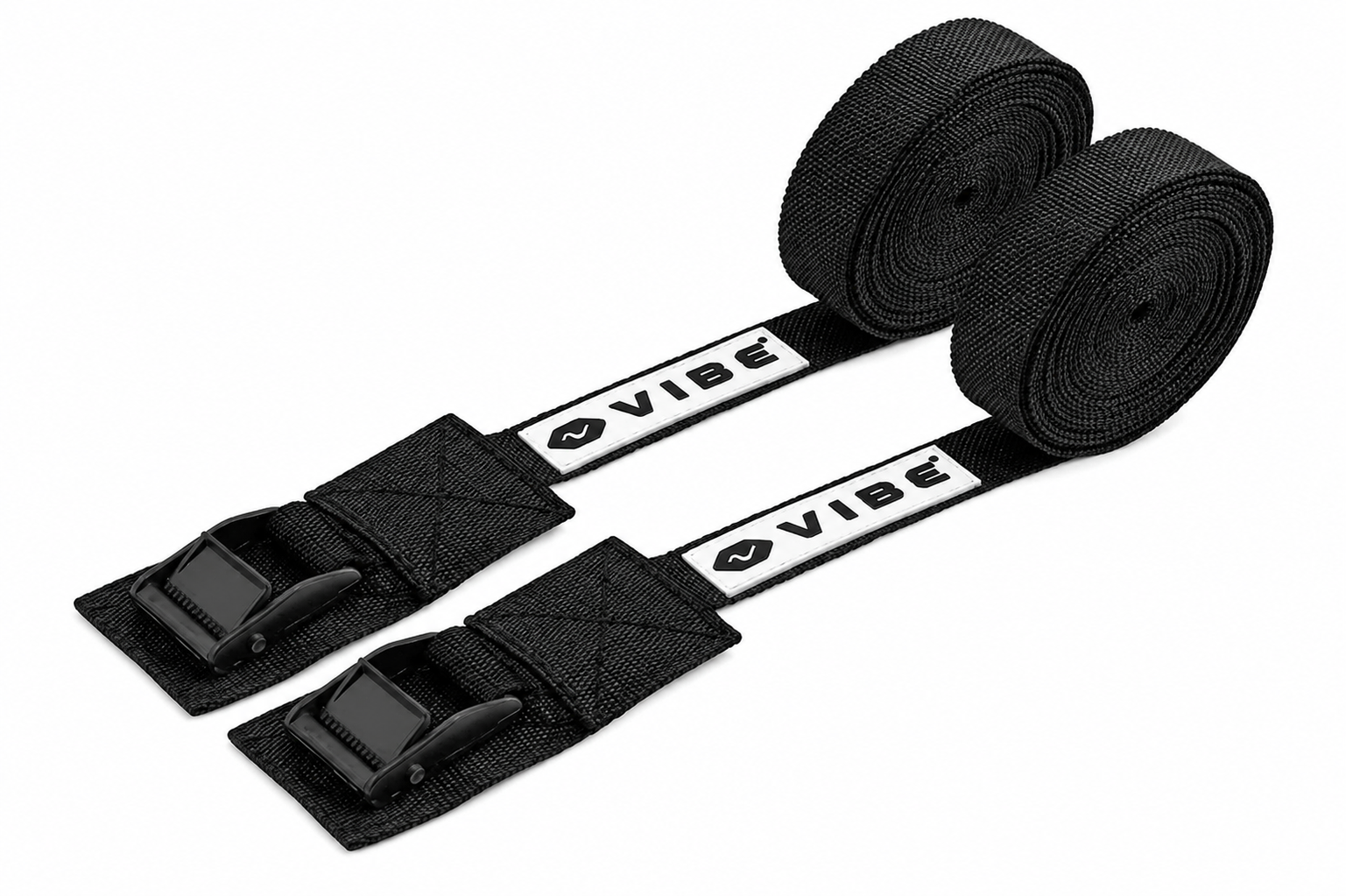
Transporting a kayak safely starts with one thing most paddlers underestimate: the right kayak tie down straps. A loose kayak on a roof rack is not just a hassle, it is a genuine safety risk to you, your gear, and everyone driving behind you. Whether you are hauling your kayak to the lake for the first time or you have logged hundreds of miles on the road, using proper tie down straps for kayak transport is one of the simplest upgrades that makes the biggest difference.
At Vibe Kayaks, we design, test, and sell kayaks and rigging accessories used by paddlers across the country, from weekend beginners to full time fishing guides. This guide draws on that direct product experience to break down what actually separates a reliable strap from one that fails halfway down the highway, how to use bow and stern straps correctly, and which options hold up best over time.
Why Kayak Tie Down Straps Matter More Than People Think
A kayak shifting even slightly at highway speed can cause serious damage to your vehicle, your kayak, or worse. Bungee cords and generic ratchet straps are not built for this job. Purpose made tie down straps are engineered with the right webbing width, tensile strength, and buckle system to hold a kayak securely through wind, vibration, and sudden braking.
This is not a minor detail. Roof mounted cargo failures are a documented cause of highway accidents, which is why most state laws require cargo, including kayaks, to be secured well enough that it cannot become a road hazard. Using proper tie down straps is not just about protecting your gear, it is about meeting a basic safety standard every time you drive.
What Makes a Strap Reliable
-
High tensile strength webbing that resists stretching under load
-
A smooth, reliable cam buckle or ratchet mechanism that will not slip
-
Soft edges or protective sleeves that prevent scratching your kayak or roof rack
-
Weather resistant material that holds up to UV exposure and moisture without degrading
Cam Buckle vs Ratchet Straps: Which Should You Use
Not all tie down straps are built the same, and the mechanism matters more than most paddlers realize.
1. Cam Buckle Straps
Cam buckle straps are the most common choice for kayak transport, and for good reason. They tighten smoothly by hand, which prevents the risk of over tightening and crushing your kayak's hull. This makes them the best kayak tie down straps for most paddlers, especially those transporting inflatable or lightweight kayaks where hull pressure is a real concern.

2. Ratchet Straps
Ratchet straps offer more tension, but they come with a real risk. Over tightening with a ratchet can deform or crack a kayak hull over time, particularly on rotomolded or inflatable builds. Unless you specifically need extra holding power for heavier loads or multi kayak stacks, cam buckle straps are typically the safer, more kayak friendly option.
Bow and Stern Straps: The Step Most Paddlers Skip
Roof rack straps alone are not enough for highway speeds. Kayak bow and stern tie down straps anchor the front and back of your kayak directly to your vehicle's tow hooks or frame, preventing forward and backward shifting that side straps cannot control.
Why Bow and Stern Straps Are Non-Negotiable
-
Prevent the kayak from sliding forward under hard braking
-
Stop rear lift caused by wind resistance at highway speeds
-
Add a second layer of security in case roof straps loosen during the drive
-
Recommended by most kayak and vehicle manufacturers for any transport over short, low speed distances
Skipping bow and stern lines is one of the most common, and most dangerous, mistakes new kayak owners make. It is also one of the easiest to fix with a two strap addition to your existing setup.
How to Properly Tie Down a Kayak
1. Center the kayak on your roof rack or crossbars before strapping it down.
2. Run straps over the hull and through or around the rack itself, not just over foam blocks or padding.
3. Tighten cam buckles evenly on both sides to keep the kayak centered and level.
4. Attach bow and stern straps at a slight downward angle to your vehicle's tow points for maximum hold.
5. Check strap tension again after driving five to ten minutes, since new webbing can settle and loosen slightly.
Following this sequence every time, rather than skipping steps when you are in a hurry, is the single biggest factor in preventing shifting or strap failure on the road.
Choosing the Best Kayak Tie Down Straps for Your Setup
-
Short trips, calm roads: A basic 3 foot cam buckle strap set is often enough for securing accessories or short, low speed hauls.
-
Regular highway transport: 15 foot cam buckle straps paired with dedicated bow and stern lines offer the most complete, road ready setup for regular trips.
-
Multiple kayaks or bundled gear: A transportation and storage bundle simplifies packing everything you need into one system, which is useful for families or guides hauling more than one kayak at a time.
Common Mistakes That Lead to Strap Failure
-
Using worn or frayed webbing. Straps take on UV damage and stress over time. Inspect them before every trip and replace any strap showing fraying, cracking, or a stiff, brittle feel.
-
Crossing straps improperly. Straps that twist or cross awkwardly across the hull distribute pressure unevenly, which can create a weak point.
-
Relying on foam blocks alone. Foam blocks cushion the kayak, but the strap itself needs to anchor to the rack or crossbar, not just the block, for a secure hold.
-
Ignoring manufacturer weight ratings. Every strap has a rated working load limit. Exceeding it is one of the most common causes of mid drive failure.
Frequently Asked Questions
1. What are the best kayak tie down straps?
Cam buckle straps are generally considered the best kayak tie down straps for most paddlers because they tighten evenly by hand and reduce the risk of hull damage compared to ratchet systems.
2. Do I need bow and stern straps if I already use roof rack straps?
Yes. Roof rack straps alone do not prevent forward or backward movement at highway speeds. Kayak bow and stern tie down straps are essential for safe, stable transport on longer or faster drives.
3. How tight should kayak tie down straps be?
Straps should be snug enough that the kayak does not shift when pushed by hand, but not so tight that the hull flexes or deforms under pressure. A firm, even tension across both sides is the goal.
4. Can I reuse the same tie down straps for different kayaks?
Yes, as long as the straps are rated for the weight and length of your kayak. Always inspect webbing and buckles for fraying, cracking, or wear before each trip.
5. How often should I replace my kayak tie down straps?
Most straps last several seasons with proper care, but you should replace them as soon as you notice fraying, stiff or cracked webbing, or a buckle that no longer holds tension reliably.
 30 days money back guarantee
 Secure and certified online shop
 1000+ Happy customers