
Kayak Roof Rack Guide: Choosing One and Strapping It Down Safely
If you have ever tried to shove a 12 foot kayak into a sedan, you already know why a kayak roof rack is essential gear for any paddler. It's the difference between a kayak that arrives at the water scratch free and one that ends up sliding off at highway speed.
A kayak roof rack is a car top carrying system, usually built around crossbars, foam blocks, or J cradles, that holds a kayak securely on your vehicle's roof using tie down straps and bow/stern lines. The safest setups combine a rated roof rack transport with locking straps and a front and back tether, checked before every drive.
This guide covers how to pick the right rack, then walks through exactly how to strap, tie, and attach your kayak so it doesn't move an inch, whether you're driving five minutes to the lake or five hours to the coast.
Table of Contents
- Why a Kayak Roof Rack Matters
- Types of Kayak Racks for Roof Transport
- How to Choose the Best Roof Rack for Your Kayak
- How to Strap a Kayak to a Roof Rack
- How to Tie a Kayak to a Roof Rack Without Cam Straps
- How to Attach a Kayak to a Roof Rack With No Crossbars
- Real Incidents: Why This Checklist Isn't Optional
- Safety Checklist Before You Drive
- FAQs
Why a Kayak Roof Rack Matters
A dedicated kayak rack does three things a set of bare roof rails can't. It distributes weight evenly across the hull so the kayak doesn't develop pressure dents or "oil canning" on long drives. It creates fixed anchor points for straps and bow/stern lines, instead of relying on door frames or hood latches that can scratch paint or fail. And it cuts wind noise and drag compared to loose foam blocks shifting around at 70 mph.
This isn't a hypothetical risk. In one widely reported 2022 case, Michigan State Police confirmed a kayak and roof rack separated from a passing car on M 28 in Schoolcraft County, striking an oncoming pickup truck and killing its driver. More recently, in 2025 the Utah Highway Patrol shared dashcam footage of a kayak sliding out of its strap on the freeway and flying toward another vehicle, using the near miss as a public reminder to double check cargo before every drive. Neither incident involved exotic gear failure. Both came down to straps and tie downs that weren't secure enough for highway speed.
Types of Kayak Racks for Roof Transport
Not all kayak racks are built the same, and picking the right style matters as much as tightening the straps correctly.
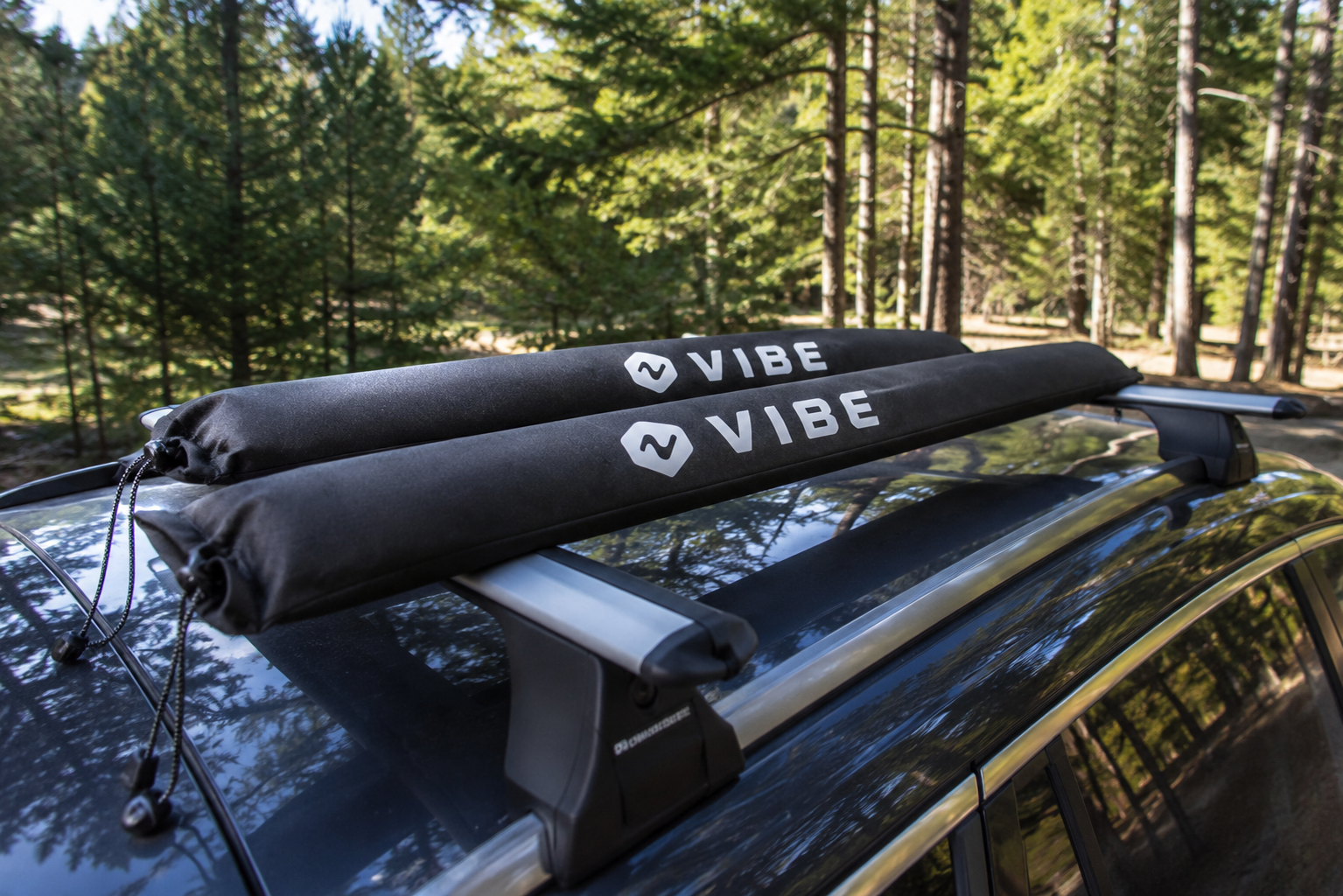
Factory crossbars are the most common option for SUVs and wagons. They're strong, come as an OEM fit, and can be reused for other gear like bike racks or cargo boxes. The downside is that bare bars can dent a hull without padding.
Crossbar pads or foam blocks sit on top of factory crossbars and are the cheapest, lightest way to protect the hull. They work well for occasional trips but offer less stability than J cradles on long highway drives.
J cradles and saddles hold the kayak on its side, which saves roof space and works well if you carry multiple kayaks or paddle often. They cost more and can be harder to load solo, but they're the most secure option for regular use.
No rack strap systems work on vehicles with rain gutters or no rails at all. They're the most universal option but aren't ideal for repeated trips or long distance driving.
If you are transporting a fishing kayak or anything over 10 feet, pair whatever rack style you choose with padded crossbars and rated cam straps. Avoid bungee cords, since they stretch and lose tension on the highway.
How to Choose the Best Roof Rack for Your Kayak
When shopping for a kayak rack for roof mounting, check these four things before you buy.
First, confirm the weight rating. Add your kayak's weight to any gear (paddle, PFD, tackle) and make sure it's under your rack's rated capacity, with room to spare. Second, look at the crossbar spread. Wider spacing generally means better stability for longer kayaks. Third, check padding and coverage. Crossbar pads should be long enough to cushion the full hull contact area, not just the center. Fourth, confirm strap compatibility. The rack needs proper loop or slot points for cam straps and separate bow/stern tie downs.
Vibe's cartop and roof rack collection includes crossbar pads, locking straps, a cable lock, and a full transport bundle sized specifically for kayaks, a straightforward way to get a matched setup instead of guessing at compatibility between third party parts.
How to Strap a Kayak to a Roof Rack
Here's exactly how to strap a kayak to a roof rack using cam buckle straps.
- Load the kayak hull down (or on its side for J cradles) directly onto the crossbar pads, centered front to back.
- Throw the strap over the kayak, letting the buckle end hang on the far side.
- Feed the loose end under the crossbar, around, and up through the cam buckle.
- Pull the strap tight by hand, snug but not overly tight, since overtightening can crease or crack the hull.
- Repeat on the second crossbar, then push down on the kayak between the straps. It shouldn't shift side to side or lift off the pads.
- Tuck the excess strap and buckle, or twist it a few times, so it doesn't whip or rattle at speed.
- Add bow and stern lines from the kayak's grab handles to tow hooks or frame anchor points at the front and rear of the vehicle. This stops forward and backward movement that crossbar straps alone can't fully prevent.
Use two straps minimum for anything under 12 feet, and three for longer touring or tandem kayaks.
How to Tie a Kayak to a Roof Rack Without Cam Straps
If you only have rope on hand, here's how to tie a kayak to a roof rack securely.
- Loop the rope around the crossbar and back over the kayak.
- Use a trucker's hitch. Tie a loop partway down one end, thread the rope end through it, and pull down to create mechanical leverage before tying it off. This gets you tension close to what a cam strap provides.
- Finish with two half hitches around the crossbar so the knot can't slip loose from vibration.
- Repeat for the second crossbar, then add separate bow and stern lines tied with the same trucker's hitch method.
Rope works in a pinch, but it stretches more than cam straps and needs rechecking after the first 10 to 15 minutes of driving. For regular trips, locking straps are worth the upgrade since they also deter theft at trailheads and gas stations.
How to Attach a Kayak to a Roof Rack With No Crossbars
If your car has bare rails or no rack system yet, here's how to attach a kayak to a roof rack using a temporary foam block setup.
- Place two foam blocks across the roof, spaced roughly a third of the way in from each end of the kayak.
- Run straps through the car doors (front and rear) and over the top of the foam blocks and kayak, then close the doors on the straps to anchor them.
- Tighten evenly on both sides so the kayak sits centered and doesn't lean.
- Add bow and stern lines to the vehicle's tow hooks or frame, exactly as with a permanent rack.
This works fine as a short term solution, but foam blocks aren't rated for regular highway use. Treat this setup as temporary until you install real crossbars.
Real Incidents: Why This Checklist Isn't Optional
Highway patrol agencies and state police departments have documented enough kayak related roof rack failures that many now issue public safety reminders about securing cargo. Two documented cases worth knowing about:
In Michigan in October 2022, state police confirmed that a kayak and its roof rack came loose from a passing vehicle on M 28 in Schoolcraft County and struck an oncoming pickup truck, killing the driver. The kayak also struck a third vehicle further back, causing additional damage. Source: KIRO 7 News
In Utah in 2025, the Utah Highway Patrol posted dashcam video of a kayak sliding free from its strap at freeway speed and striking another vehicle. No one was hurt, but the agency used the footage to urge drivers to recheck cargo before every trip. Source: ABC4 Utah
Both cases trace back to the same root cause covered in this guide: a strap or rack connection that wasn't rated, tightened, or backed up with bow and stern lines for sustained highway speed. That's exactly why the step by step methods above call for cam straps instead of bungees, a front and back tether in addition to crossbar straps, and a recheck after the first 10 to 15 minutes of driving.
Safety Checklist Before You Drive
Before you pull out of the driveway, confirm the following: straps are tight and buckles are clear of the roof and doors, bow and stern lines are attached at both ends, the kayak is centered with hatches and hardware secured, there's no loose paddle, seat, or gear on deck, and you've planned to recheck strap tension after 10 minutes of driving. Also confirm your kayak length doesn't exceed state overhang laws, since most states require a red flag past a certain rear overhang.
Ready to gear up? Browse Vibe's cartop and roof rack accessories, including crossbar pads, locking tie down straps, a kayak cable lock, and a bundled transport kit, to get your kayak strapped down right the first time.
FAQs
1. Do I need a special roof rack for a kayak, or will a regular roof rack work?
A standard set of crossbars works fine as the base. What makes it kayak specific is adding crossbar pads or J cradles plus proper strap anchor points, since bare bars alone can dent or scratch the hull.
2. How many straps do I need to secure a kayak to a roof rack?
Most kayaks need two cam straps over the crossbars plus separate bow and stern lines, four tie down points total for a secure, highway safe load.
3. Can I drive on the highway with a kayak strapped to a roof rack?
Yes, once the kayak is centered, strapped over both crossbars, and secured with bow and stern lines. Check strap tension after the first few minutes of driving, since straps can loosen slightly as the load settles.
4. What's the difference between a kayak rack and a roof rack for a kayak?
"Roof rack" usually refers to the crossbar system itself, while "kayak rack" often means the padding, cradle, or saddle attachment added to that crossbar system specifically to carry a kayak.
5. Can two kayaks fit on one roof rack?
Yes, with wide set crossbars or stacker/J cradle accessories rated for double loads. Check your rack's total weight capacity before loading two kayaks at once.
6. Has a kayak coming off a roof rack ever caused a serious accident?
Yes. State police in Michigan confirmed a 2022 highway death caused by a kayak and roof rack separating from a moving vehicle, and highway patrol agencies elsewhere have since publicized near-miss footage for the same reason. That's why bow and stern tie downs and rated straps aren't optional extras.

 30 days money back guarantee
 Secure and certified online shop
 1000+ Happy customers