
Kayak Anchor Guide: How to Choose the Right Setup for Any Water
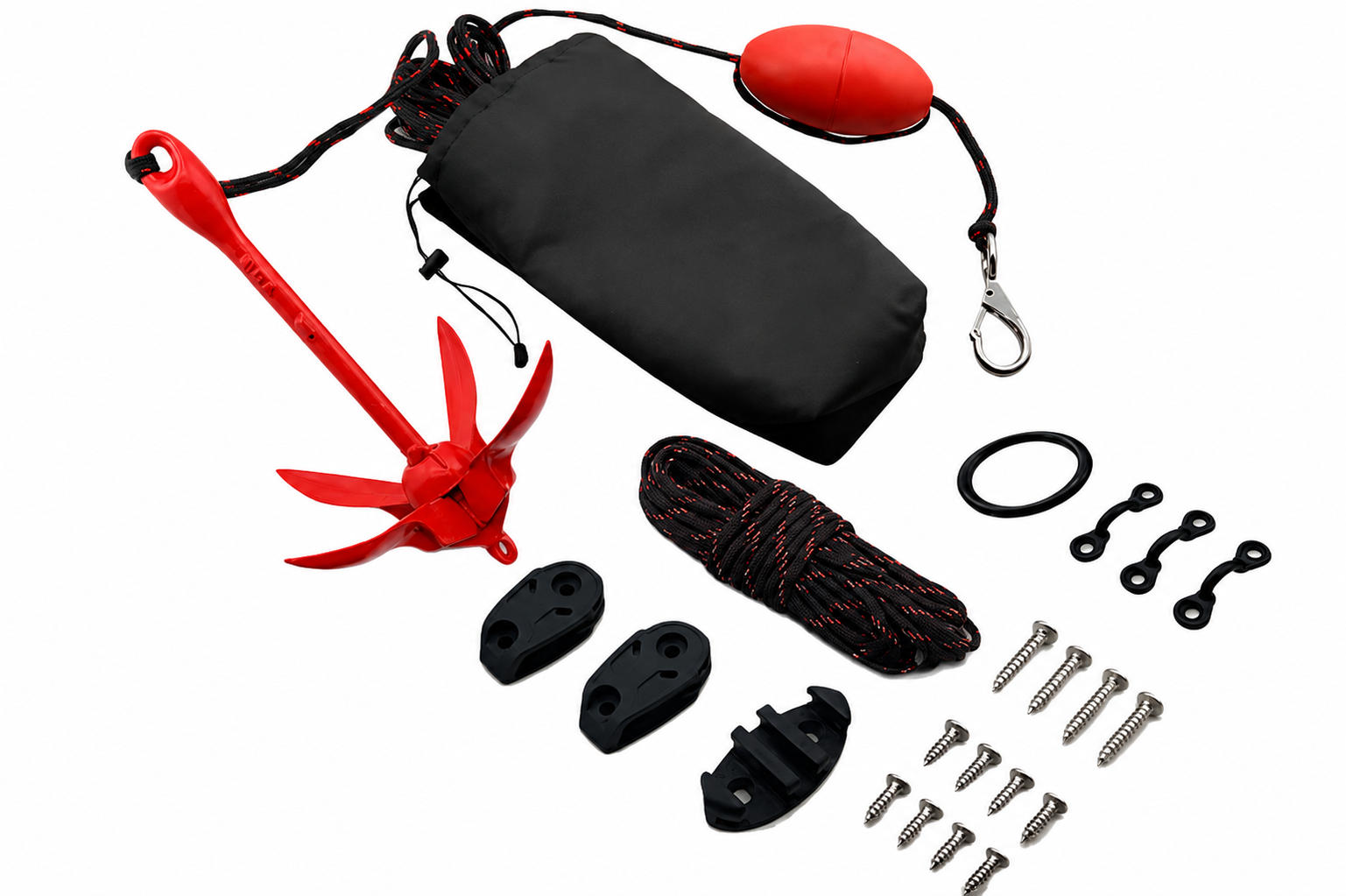
Drifting off your fishing spot the moment you cast is one of the most common frustrations for kayak anglers, and it's almost always solved by one piece of gear: a proper kayak anchor. Whether you paddle calm inland lakes, moving rivers, or coastal flats along the U.S. coastline, the right anchor keeps you locked in place so you can focus on fishing instead of paddling back into position. This guide breaks down the main anchor types, how an anchor trolley changes the game, and how to put together a complete kayak anchor system that matches your water.
Why a Dedicated Kayak Anchor Matters
A rock tied to a rope might stop you from drifting, but it won't hold reliably, and it can damage your hull or scratch your deck. Purpose-built anchors for kayaks are sized and shaped to grip specific bottoms, deploy quickly with one hand, and stow compactly when not in use usually in a milk crate, hatch, or dedicated anchor pouch. For anglers who fish current, tide changes, or wind-exposed water, a dedicated anchor is the difference between staying locked on the fish and spending half the trip paddling back into position.
Types of Anchors for Kayaks
Not every anchor works in every environment, so match the anchor to your typical water:
- Grapnel anchors fold flat for storage and grip well on rocky or mixed bottoms, making them the most popular all-around choice.
- Claw anchors dig into sand or mud and resist rolling, ideal for coastal and tidal flats.
- Mushroom anchors rely on weight rather than grip, best suited to calm lakes and ponds with soft bottoms.
- Stake-out poles push directly into shallow, soft bottoms in under five feet of water, common in marshes and grass flats.
- Drift chains or socks don't stop you completely but slow your drift for controlled, steady presentations in open or windy water.
Most anglers keep a grapnel anchor as their primary setup and add a stake-out pole or drift chain as secondary gear for shallow water or fast-moving conditions. If you only buy one anchor to start, a folding grapnel in the 1.5 to 3.5-pound range covers the widest range of U.S. lakes, rivers, and coastal launches.
What a Kayak Anchor Trolley Does
A kayak anchor trolley is a pulley-and-line system that runs along the side of your kayak, letting you shift the anchor point from bow to stern without leaving your seat. Anchoring from a fixed point at the bow alone will swing your kayak with the current or wind, but a trolley lets you adjust that pivot point so your kayak sits at the angle you want, whether that's nose-first into current or broadside for casting. Installing a kayak anchor trolley is one of the highest-value upgrades you can make, and most kits mount with basic hand tools in under an hour. Once it's rigged, sliding the anchor point forward or aft takes seconds, which matters when fish move or the wind shifts mid-trip.
Building a Complete Kayak Anchor System
An anchor alone only solves half the problem. A functional kayak anchor system pairs the anchor with the right line, a trolley, and a cleat or anchor lock to secure it all. As a starting point, use rope roughly three to five times the depth of the water you're fishing, and choose a low-stretch, marine-grade line that won't tangle. In saltwater, look for stainless or coated hardware on the trolley pulleys and cleat to avoid corrosion over a season of use. Combination kits, like anchor-and-trolley bundles, are a practical way to get a matched system without piecing together mismatched parts, and they're worth checking out if you're outfitting a kayak from scratch, such as the anchoring and rigging gear on VibeKayaks.com.
How to Anchor Your Kayak: Quick Steps
- Identify your spot and check wind, current, and depth before deploying.
- Choose the anchor type suited to the bottom composition.
- Lower the anchor slowly rather than tossing it, to avoid tangles.
- Let out enough line, then use your trolley to set the final angle.
- Test the hold by paddling gently against the line before settling in.
- Keep a knife or quick-release rigged in case you need to cut free fast.
Conditions to Watch
Wind and current both push against your hull, so in exposed water, use more scope (line length) and a heavier or higher-holding-power anchor. As a rule of thumb, once sustained wind pushes past 15 mph, a lightweight anchor alone won't hold — add scope or switch to a heavier anchor. In tidal zones, always account for rising water and re-check your line length as the tide shifts, since a line set for low tide can come up short a few hours later. On rivers, anchor from the bow trolley position facing upstream so current pins you flat rather than spinning you sideways.
Final Thoughts
The right kayak anchor setup comes down to matching your anchor type, trolley, and rigging to the water you fish most. Start with a reliable grapnel anchor and trolley combination, then add specialized gear like a stake-out pole or drift chain as your trips demand it. A well-rigged kayak anchor system means less time fighting the drift and more time on the fish.
Frequently Asked Questions
What size kayak anchor do I need?
Most kayaks do well with a 1.5 to 3.5-pound folding anchor. Smaller kayaks and calm water call for the 1.5 to 2.5-pound range, while larger kayaks or current-heavy water often need closer to 3.5 pounds or more.
How much rope do I need for a kayak anchor?
As a rule, carry three to five times the maximum depth you fish. In 10 feet of water, that's 30 to 50 feet of rope, giving the anchor enough scope to set properly instead of dragging.
Do I really need a kayak anchor trolley?
A trolley isn't required, but it makes anchoring dramatically easier. Without one, you're stuck anchoring from a single fixed point, which lets wind and current swing your kayak. A trolley lets you set the exact angle you want in seconds.
What's the best anchor for kayak fishing in current or tidal water?
A claw or grapnel anchor paired with a trolley generally holds best in current and tide, since you can angle the kayak to face into the flow. In fast rivers, a stake-out pole in shallow water is often more reliable than a hanging anchor.
How do I keep my kayak from spinning while anchored?
Spinning almost always means you're anchored from a single fixed bow or stern point. Rig a trolley so you can adjust the anchor point along the kayak's length, and let out enough scope so the line pulls the hull straight rather than at an angle.
 30 days money back guarantee
 Secure and certified online shop
 1000+ Happy customers