
Kayak Motor Buying Guide: Trolling Motors, Jet Drives & Bixpy Compared
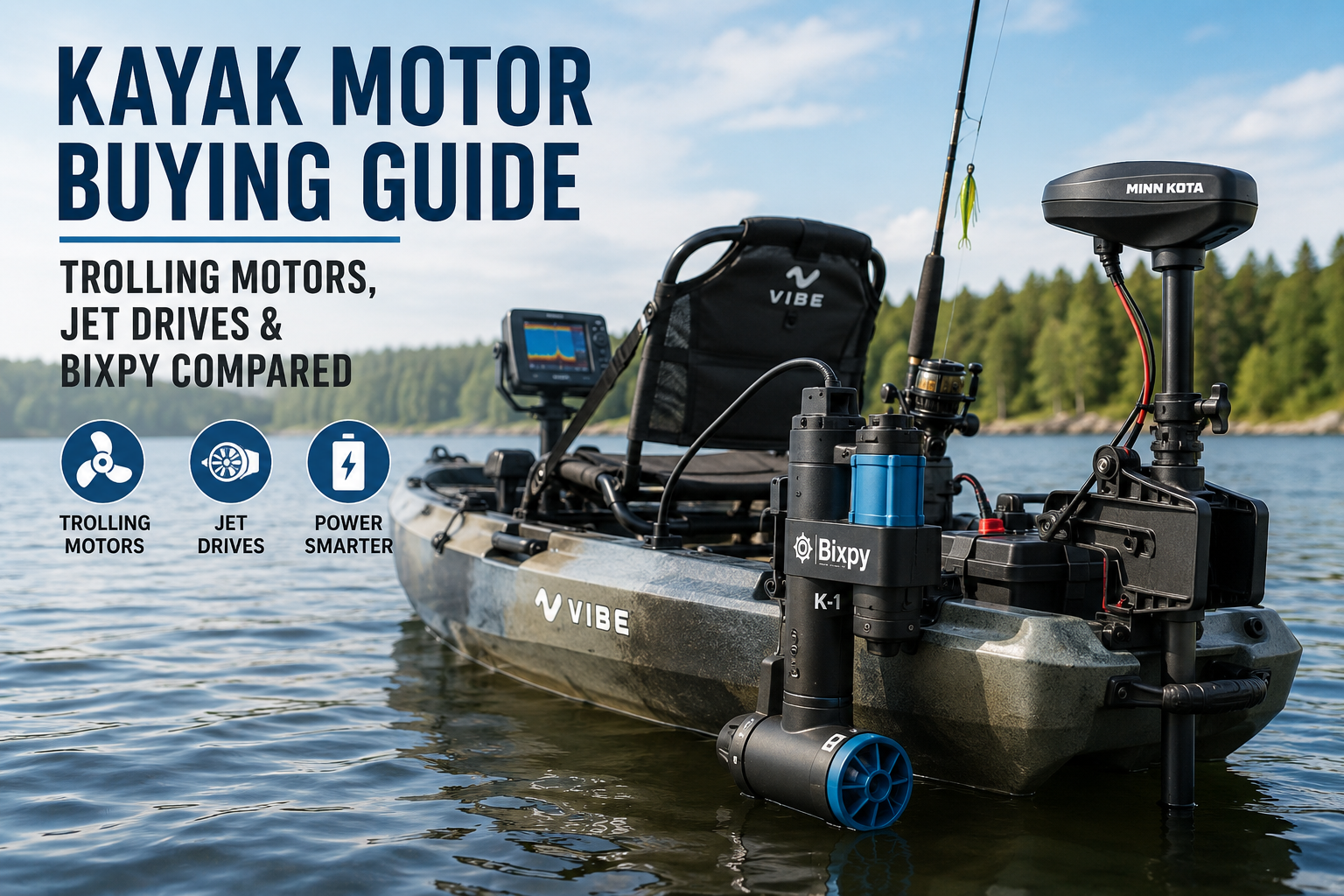
A kayak motor falls into two main types, traditional trolling motors (propeller-driven, better for open water) and jet-drive motors like Bixpy (enclosed impeller, better for shallow or weedy water). Choose based on where you fish, how much gear you run, and how much added weight you're willing to carry.
Adding a kayak motor is one of the biggest upgrades you can make to your setup, whether you're chasing more water on a single trip or just want a break from constant paddling. But "kayak motor" covers more ground than most buyers expect from traditional trolling motors to jet-drive systems like Bixpy and picking the wrong type for how you actually fish can mean wasted money and a frustrating day on the water. This guide breaks down the main types of kayak motors, how they compare, and what to look for before you buy.
What is a Kayak Motor?
A kayak motor is an electric propulsion system mounted to a kayak that replaces or supplements paddling. Most kayak motors fall into two categories: propeller-driven trolling motors adapted for kayak use, and purpose-built jet-drive motors like Bixpy that use an enclosed impeller instead of an exposed blade.
Why Add a Motor to Your Kayak?
A motor turns a kayak from a paddling-powered boat into a true hands-free fishing platform. You can cover more water without arm fatigue, hold position against wind or current more easily, and get back to the launch quickly if weather turns. For anglers especially, a motorized kayak means both hands stay free for casting instead of alternating between rod and paddle.
Types of Kayak Motors to Consider
1. Traditional Trolling Motors
A trolling motor for kayak use typically means a transom or bow-mounted propeller motor from established outboard brands, rigged onto the kayak with a compatible mounting and wiring system. An electric trolling motor for kayak setups like this tends to offer strong, adjustable power and integrates well with fish finders and other electronics, but it adds more weight and complexity than a purpose-built kayak motor, and it's better suited to open water than skinny, weedy, or rocky areas where a propeller can snag.
2. Bixpy Jet Motors
Jet-drive motors like the Bixpy K-1 use an enclosed impeller instead of an exposed propeller, pulling water in and jetting it out for propulsion. Because there's no blade hanging below the hull, jet drives handle shallow water, weeds, and rocky launches far better than a traditional prop motor. This Bixpy kayak motor lineup is also built specifically for kayaks and paddleboards, so mounting adapters, power packs, and controls are designed to integrate cleanly rather than being retrofitted from a boat motor.
3. Pedal-Drive Alternatives
If you're comparing propulsion options broadly, it's worth noting pedal-drive systems as a non-motorized alternative. They offer hands-free movement without a battery, but they don't match the range or effortless speed of an electric kayak motor kit, especially on longer trips.
Trolling Motor vs. Jet Drive: Key Differences
Both motor types will get you moving, but they perform differently depending on where and how you fish.
| Factor | Trolling Motor | Bixpy Jet Drive |
|---|---|---|
| Best water type | Open, deeper water | Shallow, weedy, or rocky water |
| Weight & mounting | Heavier, more rigging required | Lightweight, kayak-specific mounts |
| Maintenance | Exposed prop can catch debris | Enclosed impeller, less mid-trip snagging |
| Electronics integration | Strong — built to network multiple devices | Good, with Bixpy-specific adapters |
What to Look for in a Kayak Motor Kit
Once you've decided between motor types, a few factors determine whether a specific kayak motor kit is the right fit.
- Battery type and capacity: Lithium batteries are lighter and offer more usable runtime than lead-acid options, which matters more the longer your trips run.
- Mounting compatibility: Confirm the mount matches your kayak's hull — universal adapters, transom adapters, and pedal-drive-well adapters all fit differently depending on your kayak model.
- Control style: Hand-controlled throttles work well for open water, while foot-pedal or remote control setups can free up your hands even further for fishing.
- Total weight added: A heavier motor and battery setup affects how your kayak sits in the water and how easy it is to car-top or launch solo.
- Budget: Electric kayak motor kits span a wide price range decide early whether you need a full kit with power pack included or just a motor to pair with a battery you already own.
Popular Kayak Motor Options from Vibe
Vibe carries both major paths for motorizing a kayak. The Bixpy jet motor lineup includes the K-1 motor along with outboard power packs and a range of mounting adapters, so you can match the setup to your specific kayak. If you're running a traditional trolling motor from a brand like Minnkota or MotorGuide, Vibe also offers rigging systems designed to cleanly wire your motor and electronics together without a tangle of loose cables. Browse the full motors and mounts collection to compare all kayak motors side by side.
Final Thoughts
There's no single best kayak motor for every angler — the right choice depends on the water you fish, how much gear you're running, and how much weight and cost you're comfortable adding to your setup. If you fish shallow, weedy, or rocky water, a Bixpy jet motor is likely the better fit. If you're running a full electronics package in open water, a rigged trolling motor kit may serve you better. Either way, explore Vibe's motors and mounts collection to find the setup that matches how you actually fish.
Questions fréquemment posées
1. Do I need a special kayak for a motor, or can I add one to any kayak?
Most sit-on-top fishing kayaks can be motorized with the right adapter. Hull shape, weight capacity, and available mounting points all affect which kayak motor kit will fit, so check your kayak's specs against the adapter's compatibility before buying.
2. How long does a kayak motor battery last on the water?
Runtime depends on battery capacity, motor speed setting, and conditions like current and wind. Lithium batteries generally offer longer usable runtime per pound than lead-acid alternatives, which is worth factoring in for all-day trips.
3. Is a Bixpy motor better than a trolling motor for kayak fishing?
It depends on where you fish. Bixpy jet motors are the stronger choice in shallow, weedy, or rocky water, while a rigged trolling motor kit can be a better fit for anglers running heavier electronics packages in open water.
4. What size battery do I need for a kayak motor?
Battery size depends on the motor's power draw and how long you plan to run it per trip. Most kayak motor kits list a recommended battery capacity matching or slightly exceeding that recommendation gives you a safety margin for longer days on the water.
5. Can I move a Bixpy motor between different kayaks?
Yes. Because Bixpy motors mount through adapters rather than permanent installation, the same motor can typically move between kayaks as long as you have the correct adapter for each hull.

 Satisfait ou remboursé sous 30 jours
 Boutique en ligne sécurisée et certifiée
 Plus de 1000 clients satisfaits