
Kayak Bags vs Dry Bags: What is the Difference and Which Do You Need?
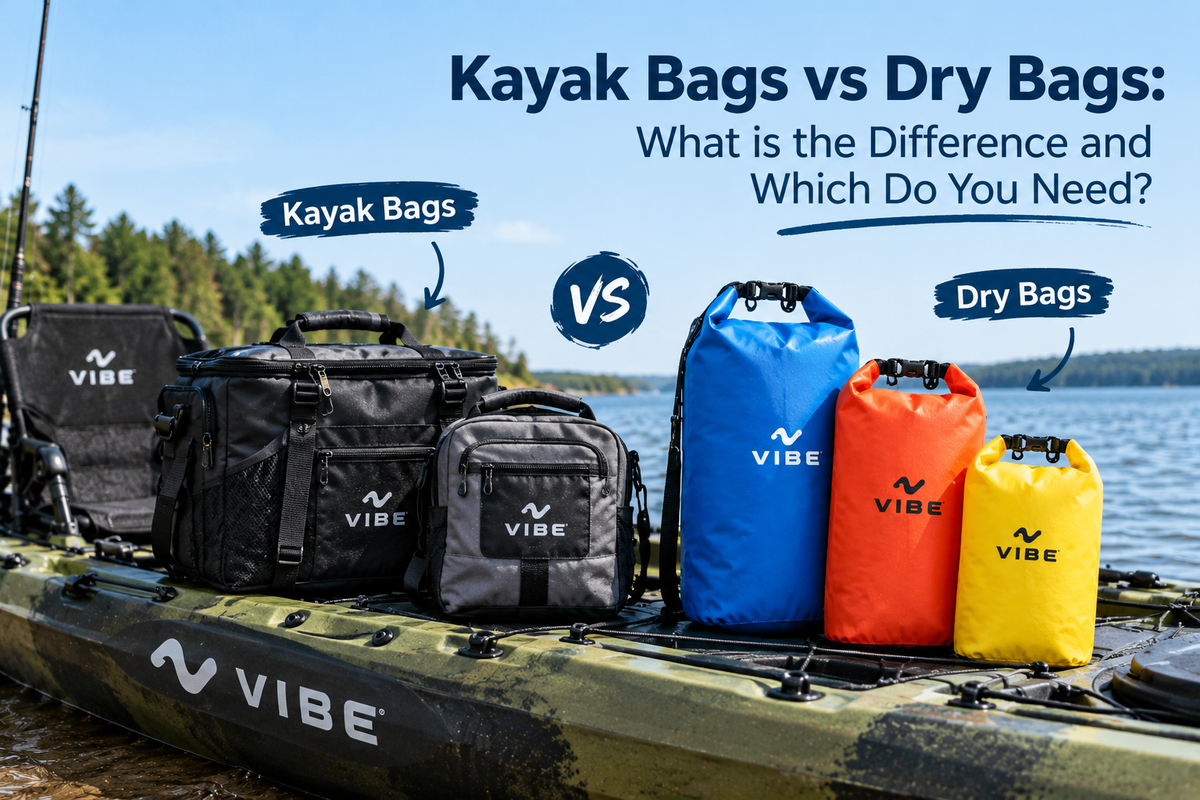
Choosing the right kayak bags can make or break a paddling trip. Whether you're heading out for a calm lake paddle or a whitewater adventure, keeping your gear dry and secure is just as important as your paddling technique. Many paddlers use the terms "kayak bag" and "dry bag" interchangeably, but they aren't always the same thing. Understanding the difference helps you choose the right waterproof kayak storage for your specific needs, whether that's a multi-day expedition or a short weekend float.
At Vibe Kayaks, we get asked this question often: are kayak bags and dry bags the same product, and if not, which one should you buy? This guide breaks down the differences, explains when to use each, and helps you pick the best gear storage solution for your next trip on the water.
What Are Kayak Bags?
A kayak bag is a broad term for storage solutions designed specifically to fit on or in a kayak. These bags are built to attach to deck rigging, bungee cords, or storage compartments, and they come in different shapes depending on where they sit on the boat. Kayak bags include:
- Kayak deck bags that mount on the bow or cockpit area
- Stern storage bags for larger gear
- Cockpit bags for quick-access items like snacks or a phone
- Specialty bags shaped to fit hatches or tank wells
Not every kayak bag is fully waterproof. Some are simply water-resistant or splash-proof, meaning they can handle light spray but aren't meant for submersion. This is the key distinction paddlers often miss.
What is a Dry Bag?
A dry bag, sometimes called a dry sack, is a roll-top sealed bag engineered to keep contents completely dry even if submerged. The dry bag vs dry sack naming debate is mostly regional; both terms describe the same product: a waterproof pouch with a roll-and-buckle closure that creates an airtight, watertight seal.
Dry bags are made from coated nylon, PVC, or TPU materials and are rated by liter capacity, from small 5L pouches for electronics to large 40L+ bags for camping gear. Because they seal completely, dry bags are the go-to choice for protecting sensitive items like phones, wallets, clothing, and sleeping bags during whitewater rafting, sea kayaking, or SUP touring.
Key Differences Between Kayak Bags and Dry Bags
Here's how the two compare at a glance:
-
Primary purpose: A kayak bag is built for on-boat storage and organization, while a dry bag is built purely for waterproofing contents.
-
Waterproof level: Kayak bags vary from splash-resistant to fully sealed, whereas dry bags are designed to be fully submersible.
-
Attachment: Kayak bags typically use straps, clips, or deck rigging to mount to the boat; dry bags are standalone and are often clipped inside a kayak bag for extra security.
-
Best for: Kayak bags suit quick-access gear like tools and snacks, while dry bags are better for electronics, clothing, and camping essentials that need guaranteed protection.
In many cases, paddlers use both together. A kayak deck bag holds the dry bag in place on the boat, while the dry sack inside protects the actual contents from water.
Which One Do You Actually Need?
The right choice depends on your paddling style and what you're carrying.
Choose a Kayak Deck Bag If:
- You need quick access to items while paddling
- You're storing tools, snacks, or a map
- You want a bag that mounts securely to your boat's rigging
Choose a Dry Bag If:
- You're carrying electronics, clothing, or a phone
- You expect rough water, rain, or capsizing risk
- You need long-term waterproof kayak storage for overnight trips
Choose Both If:
- You're planning a multi-day kayak camping trip
- You want organization on the boat plus full waterproofing
- You're paddling in unpredictable conditions like coastal or whitewater routes
If you're just starting to build your setup, our seasonal buying guide breaks down which materials and closures hold up best across different water sports.
How to Choose the Best Kayak Bags for Your Trip
When shopping for the best kayak bags, consider these factors:
-
Capacity: Match liter size to your trip length. Day trips typically need 5-10L, while multi-day trips call for 20L or more.
-
Material: Look for PVC, TPU, or coated nylon for durability against UV and abrasion.
-
Seal type: Roll-top with a buckle offers the most reliable waterproofing.
-
Mounting compatibility: Confirm the bag fits your kayak's deck rigging or bungee system.
-
Visibility: Bright colors help with safety and make gear easier to spot on the water.
Not sure which size fits your gear list? Our guide on sizing your dry bag walks through liter capacity by trip type.
Caring for Your Dry Bags and Kayak Bags
Proper maintenance extends the life of your waterproof kayak storage:
-
Rinse bags with fresh water after every trip, especially after saltwater use
-
Air dry fully before storing to prevent mildew
-
Avoid folding at the same crease repeatedly, as this weakens seams
-
Store in a cool, dry place away from direct sunlight
-
Check buckles and seals seasonally for wear
Final Thoughts
Kayak bags and dry bags serve different but complementary roles. A kayak bag keeps your gear organized and accessible on the boat, while a dry bag guarantees your essentials stay bone dry no matter what the water throws at you. For most paddlers, the smartest setup combines both: a secure deck bag paired with a fully sealed dry sack inside.
Ready to gear up? Explore our full range of dry bags built for kayaking, SUP, and rafting and find the right fit for your next adventure.
Questions fréquemment posées
1. Is a dry bag the same as a dry sack?
Yes. "Dry bag" and "dry sack" refer to the same product: a roll-top, sealed bag designed to keep contents completely waterproof, even when submerged.
2. Do I need a kayak bag if I already have a dry bag?
Not always, but a kayak deck bag makes it easier to secure your dry bag to the boat and keeps frequently used items within reach while paddling.
3. What size dry bag do I need for a day trip?
For a single-day kayak trip, a 5L to 10L dry bag is usually enough for a phone, keys, snacks, and a light layer.
4. Are all kayak bags waterproof?
No. Some kayak bags are only water-resistant or splash-proof. Check the product description for a full waterproof rating if you need submersion-level protection.
5. Can I use a dry bag for other water sports besides kayaking?
Yes. Dry bags work equally well for SUP, rafting, canoeing, fishing, and even hiking near water, since they protect contents from rain, splashes, and full submersion.


 Satisfait ou remboursé sous 30 jours
 Boutique en ligne sécurisée et certifiée
 Plus de 1000 clients satisfaits