
How to Rig the Vibe Sea Ghost 110 Fishing Kayak for Maximum Angler Efficiency
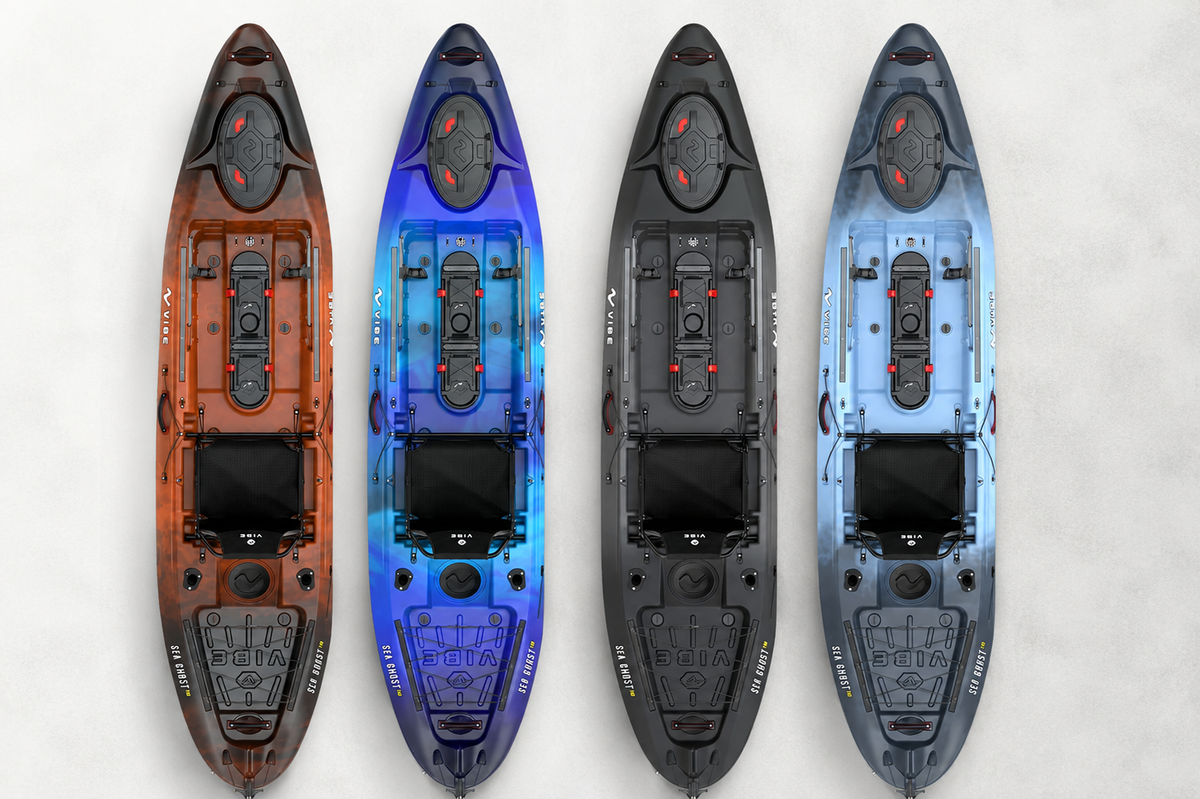
A well-rigged kayak saves you time on the water and keeps your focus on fishing instead of digging for gear. The Vibe Sea Ghost 110 Fishing Kayak comes with gear tracks, sealed hatches, and tackle tray storage built in, giving you a solid starting point for a setup that actually works for how you fish.
Rig the Sea Ghost 110 by placing your most-used gear, like rod holders and tackle trays, within easy reach of your seated or standing position, keeping heavier items low and centered, and reserving sealed hatches for gear you need to stay dry.
Where to Start: Mapping Out Your Rigging Layout
Before adding anything to the kayak, think through how you actually fish. Rigging should follow your routine, not the other way around.
A few questions worth answering first:
-
Do you fish mostly seated, standing, or a mix of both?
-
How many rods do you typically have rigged at once?
-
Do you carry a cooler, live well, or just a tackle tray?
Your answers will shape where everything goes, long before you tighten a single bolt.
Rigging the Sea Ghost 110's Gear Tracks and Tackle Storage
The Sea Ghost 110's built-in gear tracks make it easy to add or reposition accessories without drilling into the hull.
A practical starting layout looks like this:
-
Rear tank well for a cooler, crate, or larger gear you don't need mid-cast
-
Dual sealed hatches for dry storage, phone, wallet, or anything that can't get wet
-
Integrated tackle tray for lures and terminal tackle you're actively using
Keep your heaviest items low and centered. Weight placed high or off to one side affects stability, especially if you plan to stand and cast.
Positioning Rod Holders for Efficiency
Rod holder placement matters more than most anglers expect when they're first rigging a kayak.
Some general guidelines:
-
Keep your primary rod holder within a natural arm's reach from your seated position
-
Angle flush-mount holders so rod tips clear your paddle stroke
-
Leave at least one holder free for quick pickups when a fish shows
If you're just getting your gear together for the first time, it helps to see how a full rigging setup comes together in practice, which we've walked through separately.
A Simple Kayak Maintenance Guide for Your Rigged Setup
Rigging your kayak well is only half the job. A basic kayak maintenance guide keeps that setup working the way it should trip after trip.
The essentials to check regularly:
-
Hardware and mounting bolts for gear tracks and rod holders
-
Hatch seals, to confirm they're still watertight
-
The rudder and foot brace system for smooth, unrestricted movement
Catching small issues early is a lot easier than fixing a failed mount mid-trip.
How to Maintain a Fishing Kayak After Every Trip
Knowing how to maintain a fishing kayak really comes down to a short post-trip routine, not a major overhaul.
After each outing:
-
Rinse the hull, hatches, and hardware with fresh water, especially after saltwater trips
-
Wipe down and dry the seat to prevent mildew buildup
-
Check tackle trays and hatches for trapped water before closing them up
A few consistent minutes after each trip go a long way toward avoiding bigger repairs later.
Fishing Kayak Care Tips for Rigged Accessories
Good fishing kayak care extends to everything you've mounted, not just the hull itself.
A few kayak care tips worth building into your routine:
-
Loosen and re-tighten gear track mounts periodically to prevent them from seizing
-
Inspect rod holders for cracks or UV wear, especially after a full season of sun exposure
-
Keep an eye on the rudder cables for fraying, particularly if you fish in sandy or rocky areas
Kayak Storage Tips Between Trips
How you store the kayak between trips affects both the hull and everything rigged onto it.
A few kayak storage tips to keep in mind:
-
Store the kayak out of direct sunlight when possible, UV exposure breaks down hull material over time
-
Keep it supported evenly, rather than resting on a single point, to avoid warping
-
Remove any wet gear before storing to prevent lingering moisture and odor
If you want a refresher on how the hull itself is built for durability, it's worth revisiting the overall design before deciding how much upkeep it realistically needs.
Ready to build your setup? Check out the pricing and colors for the Vibe Sea Ghost 110 Fishing Kayak before your next trip.
Questions fréquemment posées
What's the best way to start rigging a fishing kayak?
Start by mapping out how you actually fish, seated or standing, how many rods you use, and what gear you carry, then place accessories based on that routine rather than a generic layout.
How often should I check my kayak's rigging hardware?
It's worth inspecting gear track mounts, rod holders, and hatch seals every few trips, and definitely before any longer outing.
Do I need to rinse my kayak after every trip?
Yes, especially after saltwater use. A quick freshwater rinse of the hull, hardware, and hatches helps prevent corrosion and buildup.
Where's the best place to store a fishing kayak between trips?
Store it out of direct sunlight, supported evenly rather than at a single point, and free of any wet gear that could cause odor or mildew.
 Satisfait ou remboursé sous 30 jours
 Boutique en ligne sécurisée et certifiée
 Plus de 1000 clients satisfaits