
How Fast is a Kayak Jet Motor? Speed, Range & Battery Life Explained
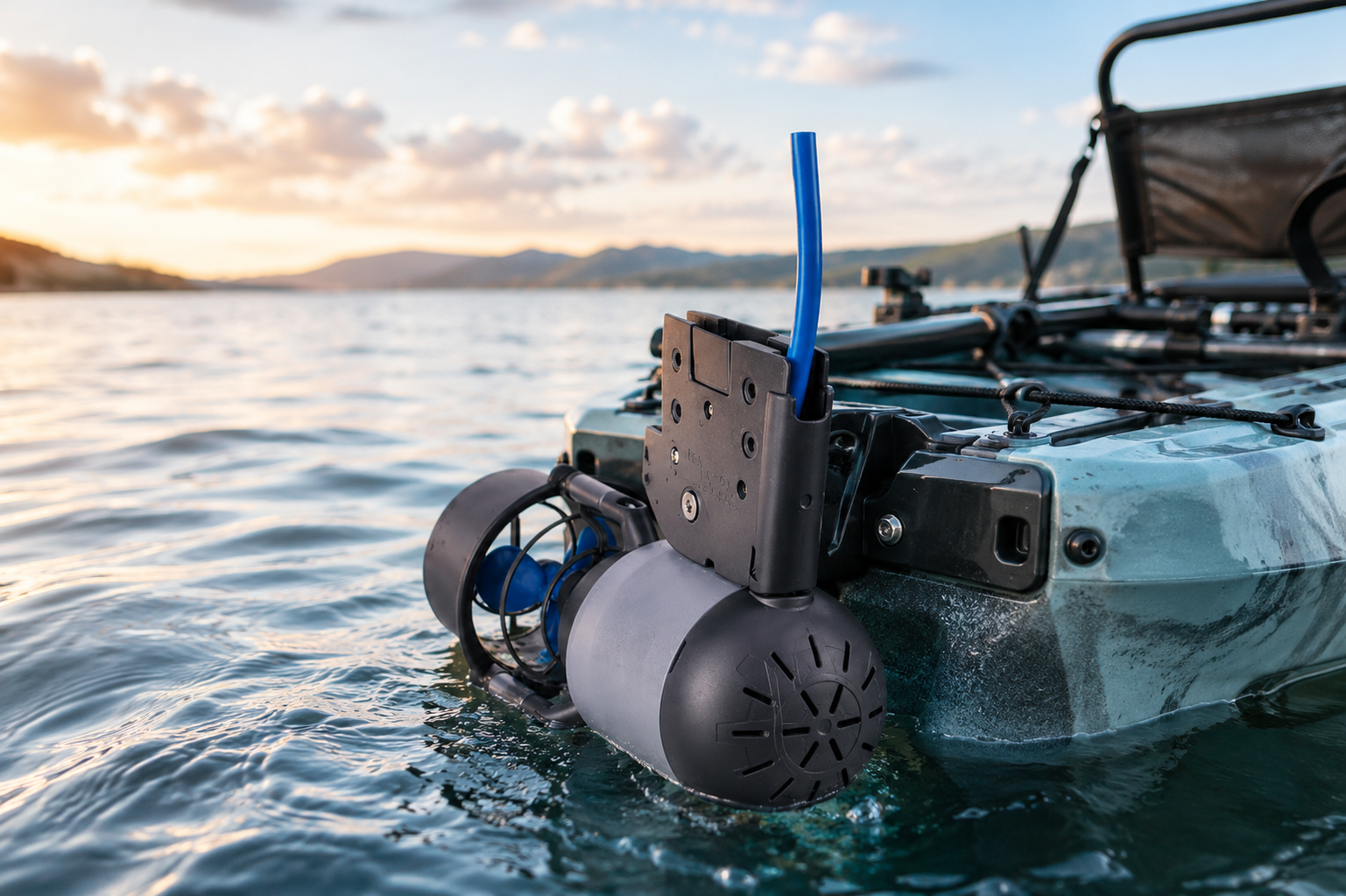
Once you have decided a jet motor is the right category for your kayak, the questions get a lot more specific. How fast will it actually go? How far can you run it before the battery dies? Is it going to feel underpowered in the current or wind? Here's what actually determines performance on a kayak jet motor, and what to expect before you buy one.
What determines how fast a kayak jet motor goes
Speed isn't just about the motor. A handful of factors interact to determine your real-world top speed:
1. Motor thrust
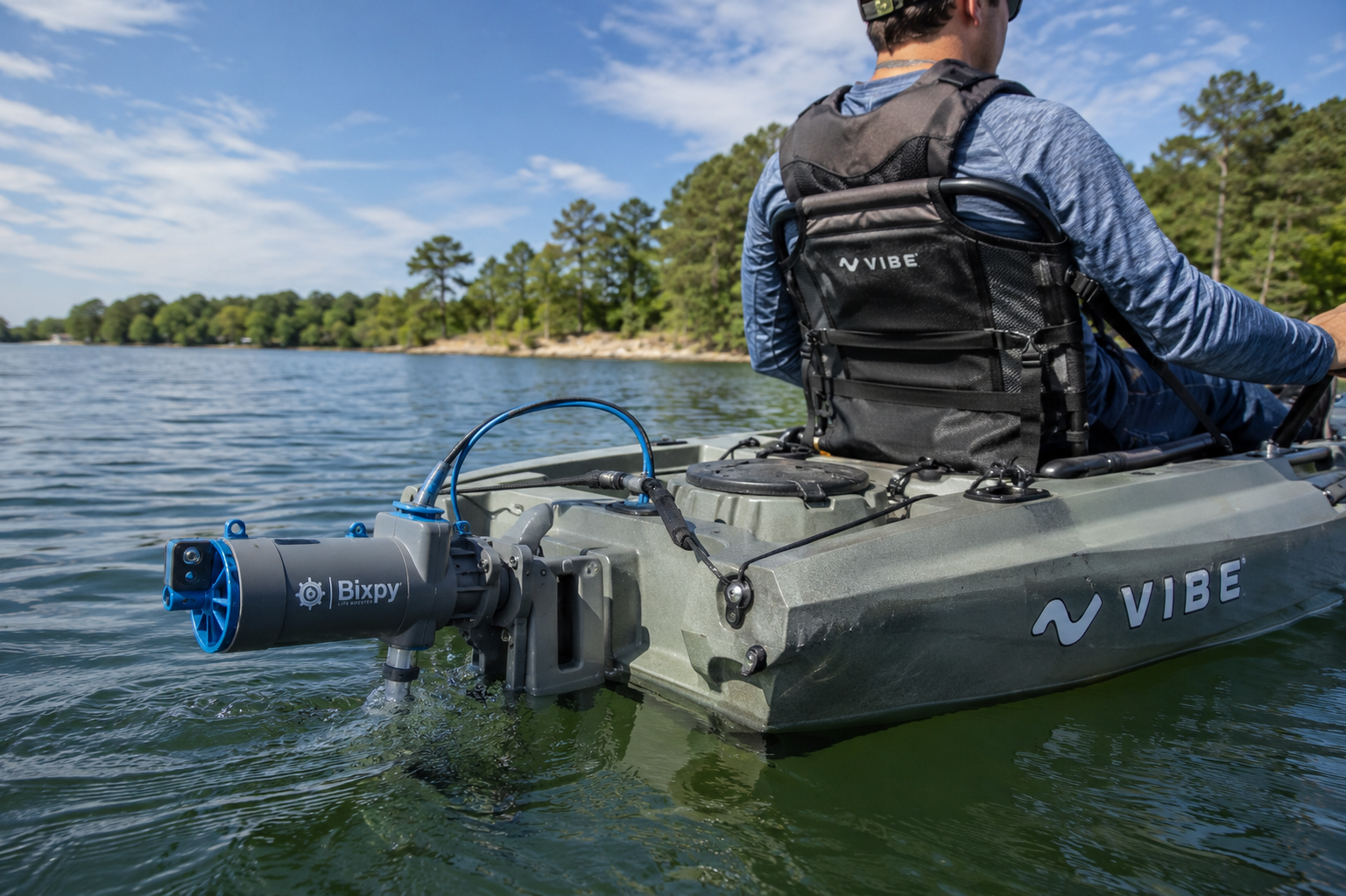
This is the raw pushing power a motor produces, usually measured in pounds of thrust. Vibe's Bixpy K-1 Motor delivers 38 lbs of thrust from a motor weighing just 2.8 lbs, a strong power-to-weight ratio that matters more for a kayak than raw thrust alone.
2. Kayak weight and hull shape
A loaded fishing kayak with gear, a cooler, and an angler aboard will always be slower than the same motor on a lighter recreational hull. Wider, more stable hulls also tend to push more water resistance than narrow touring hulls.
3. Water conditions
Current, wind, and chop all reduce your effective speed compared to flat, calm water, sometimes significantly.
Battery voltage and charge level
Motors typically run fastest at full charge and gradually lose top-end speed as the battery depletes, well before it's fully drained.
For most jet motor setups, expect noticeably brisk cruising speed on flat water, more than fast enough to cover real distance, but don't expect bass-boat speeds. The appeal of a jet motors for kayak setup is not outright speed, it's hands-free range and the ability to cover water without paddling fatigue.
How far can you run a kayak jet motor
Range comes down almost entirely to battery capacity and how hard you're running the motor.
1. Throttle setting matters more than anything else
Running at a lower, steady cruising speed extends your range substantially compared to running at full throttle, similar to how a car gets better mileage at a steady highway speed than flooring it constantly.
2. Battery capacity is the real limiting factor
Vibe offers multiple power pack options through the Bixpy batteries, motors, and kits collection, and choosing a higher-capacity pack is the most direct way to extend a day on the water without needing to recharge or swap batteries mid-trip.
3. Trolling and repositioning uses far less charge than sustained full-speed runs
Many anglers use the motor primarily to get to a spot and to reposition throughout the day rather than running it continuously, which stretches a single charge much further than constant use would.
Battery life and charging basics
1. Charge before every trip, not just when it's empty
Lithium battery packs used in most kayak jet motors perform best when kept topped off rather than run all the way down repeatedly.
2. Cold weather reduces effective runtime
Like most lithium batteries, performance and available capacity drop somewhat in cold conditions, worth factoring in for late-season trips.
3. Carrying a spare or higher-capacity pack is common for all-day trips
Serious anglers running long days on the water often carry a backup battery rather than relying on a single pack to last from dawn to dusk.
Is a kayak jet motor worth it
For most anglers, yes, especially compared to paddling alone. A kayak motor turns your kayak into a genuinely hands-free platform. You can hold position against wind or light current, reposition without picking up a paddle, and get back to the launch quickly if weather changes. The trade-off is added weight, cost, and one more system to maintain, but for anglers who fish long sessions or bigger water, most find it pays for itself in extra fishing time alone.
If you are still deciding between a jet motor and a traditional trolling motor for your setup, our kayak motor buying guide breaks down which type fits different fishing styles in more detail.
Bottom line
A kayak jet motor trades outright speed for hands-free control, range, and less fatigue over a long day on the water. Thrust, kayak weight, conditions, and battery capacity all combine to determine real-world performance, so matching the motor and battery pack to how you actually fish matters more than chasing a single top speed number. Browse the full Bixpy jet motor lineup to compare kits and find the setup that fits your kayak.
Frequently asked questions
1. How fast does a kayak jet motor go?
Speed depends on the motor's thrust, your kayak's weight and hull shape, water conditions, and battery charge level. A motor with a strong power-to-weight ratio, like the Bixpy K-1's 38 lbs of thrust from a 2.8 lb motor, delivers a brisk cruising speed on flat water, though exact top speed varies by setup.
2. How far can you run a kayak jet motor on one charge?
Range depends mainly on throttle setting and battery capacity. Running at a lower, steady speed extends range significantly compared to full throttle, and choosing a higher-capacity battery pack is the most direct way to add range for a full day on the water.
3. Is a kayak jet motor fast enough for open water?
Yes, for most recreational and fishing use. A jet motor is built for hands-free cruising and repositioning rather than high-speed performance, so it handles open water well for covering distance, holding position against wind, or getting back to launch quickly.
4. Does cold weather affect kayak jet motor battery life?
Yes. Lithium battery packs used in most jet motors lose some effective capacity in cold conditions, similar to other lithium batteries, so expect somewhat reduced runtime on cold-weather trips.
5. Do I need a spare battery for a kayak jet motor?
Not always, but many anglers running full-day trips carry a spare or higher-capacity pack rather than relying on a single battery to last from dawn to dusk, especially if the motor is used for extended running rather than occasional repositioning.

 Satisfait ou remboursé sous 30 jours
 Boutique en ligne sécurisée et certifiée
 Plus de 1000 clients satisfaits