
Hard Shell vs Inflatable Kayaks: Which Wins for Standup Fishing?
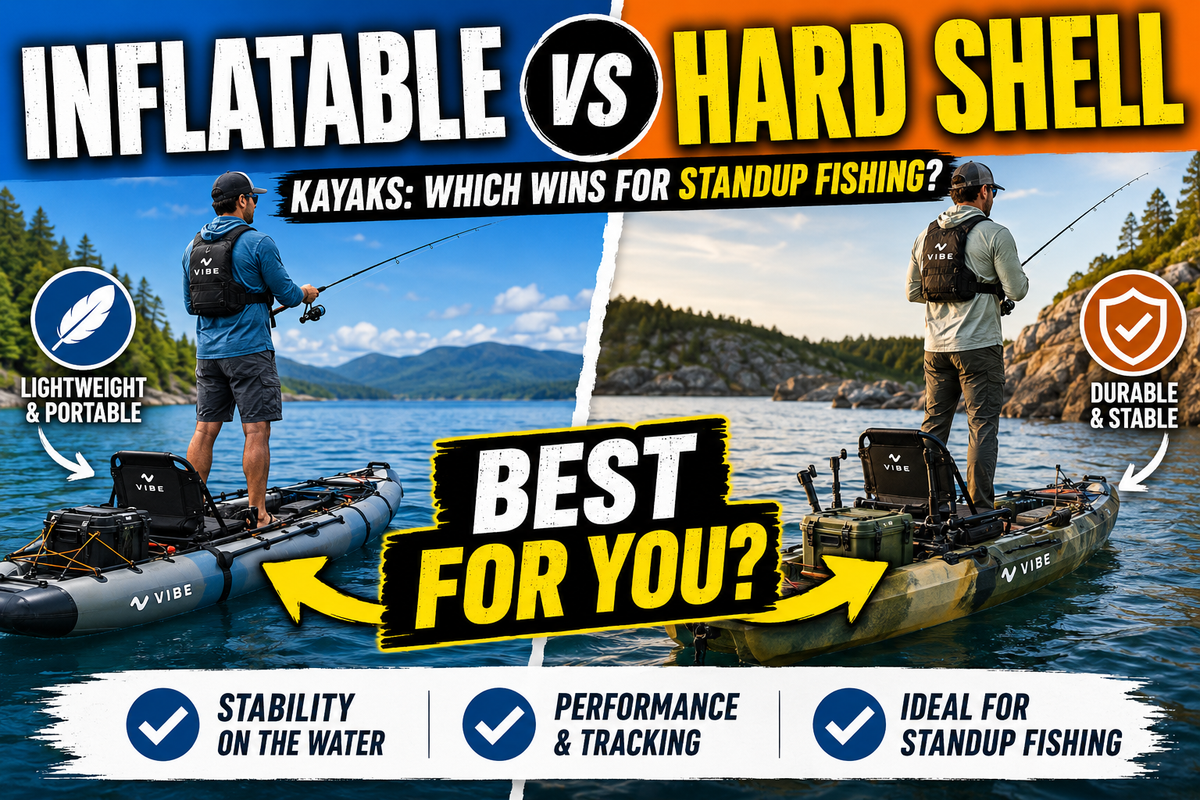
The hard shell vs inflatable kayaks debate comes up constantly among anglers who want to stand and cast without wobbling off their platform. Both hull types have loyal fans, but they behave very differently the moment you rise from a seated position to sight fish or work a topwater lure. This guide breaks down how rigid and air-filled hulls compare on stability, rigidity, storage, and portability, using the Vibe Sea Ghost 130 and the Aquaglide Blackfoot Angler 130 as real world examples of each category.
If you are searching for the best kayak for standup fishing, the hull material matters just as much as length or width. Let's look at what actually happens under your feet when you stand up on the water.
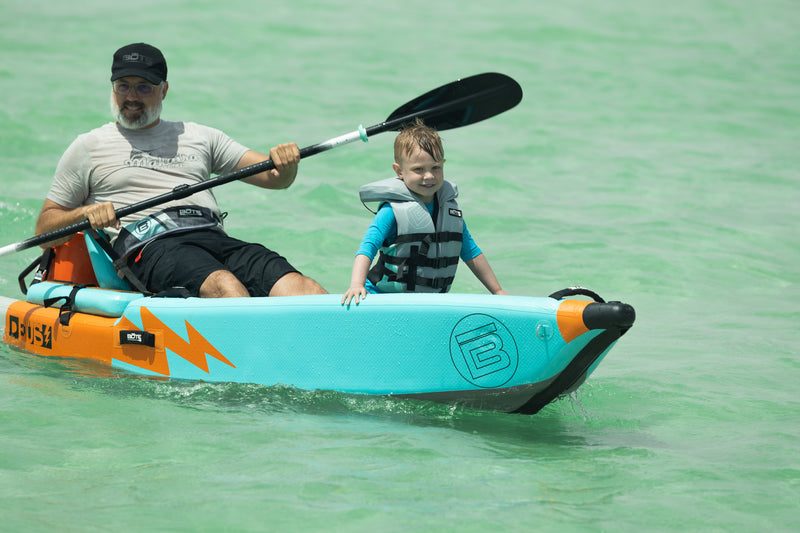
Hard Shell Kayaks: Built for Rigid Stability
A hard shell kayak, like the Vibe Sea Ghost 130, is molded from rotomolded polyethylene into a single rigid hull. Because the shape never flexes, the platform underneath your feet stays completely fixed, which is exactly what standing anglers want.
Benefits of a hard shell kayak include:
-
Zero hull flex, meaning the deck feels the same whether you are sitting or standing
-
A planted, predictable feel when shifting weight to cast or fight a fish
-
Faster hull speed and better tracking across open water
-
Long term durability with minimal maintenance beyond routine hull checks
For a closer look at how this plays out on a specific model, our full feature breakdown of the Sea Ghost 130 covers dimensions, standing platform width, and rigging options in detail.
Inflatable Fishing Kayaks: Portability with a Stability Tradeoff
An inflatable fishing kayak vs hard shell comparison usually starts with convenience. Inflatables like the Aquaglide Blackfoot Angler 130 pack down small, load into a car trunk without a roof rack, and set up in minutes. That portability is a genuine advantage for anglers with limited storage or vehicles that cannot carry a rigid hull.
However, air chambers introduce a small amount of give underfoot. Even high pressure drop stitch construction, which most quality inflatable fishing kayaks now use, flexes slightly more than a molded polyethylene hull. For seated paddling this is barely noticeable, but standing anglers often feel a softer, less locked in platform compared to a hard shell.
Advantages of inflatable kayaks include:
-
Compact storage, ideal for apartments, small garages, or frequent travelers
-
Lighter carry weight from vehicle to launch point
-
Puncture resistant materials on modern models, reducing durability concerns
-
Lower cost of entry for anglers testing out the sport
Curious how the Blackfoot Angler holds up on the water day to day? Read our inflatable kayak review for a full rundown of performance and build quality.

Which Hull Type Offers a More Stable Kayak for Standing and Casting?
For anglers prioritizing a stable kayak for standing and casting, hard shell hulls generally hold the edge. The rigid construction of the Sea Ghost 130 delivers a wider, flatter standing zone that does not compress or shift under bodyweight, which matters most when you are sight casting to redfish on a flat or working a shoreline for bass.
That said, inflatable kayaks have closed the gap significantly. The Aquaglide Blackfoot Angler 130 uses a wide beam and multiple air chambers to create a surprisingly stable platform for its category, making it a solid choice for anglers who fish calmer water and value transportability over maximum rigidity.
Quick Comparison Snapshot
-
Standing stability: Hard shell wins, thanks to zero hull flex
-
Portability and storage: Inflatable wins, with pack down convenience
-
Durability on rocky or oyster laden water: Hard shell wins with rotomolded resistance
-
Setup and breakdown time: Inflatable wins for quick launches
-
Long distance tracking speed: Hard shell generally holds an edge
Want the full side by side breakdown on these two specific models? Check out our Blackfoot Angler matchup comparing the Sea Ghost 130 and Aquaglide Blackfoot Angler 130 head to head.
Choosing Based on Your Fishing Style
-
Anglers who stand frequently to sight cast: A hard shell kayak like the Sea Ghost 130 offers the steadiest platform.
-
Anglers with limited storage or vehicle space: An inflatable model like the Blackfoot Angler 130 solves the transport problem.
-
Anglers fishing rocky, oyster heavy, or rough terrain launches: Hard shell durability holds up better over time.
-
Anglers who travel often or fish multiple locations: Inflatable portability makes logistics easier.
If you are still narrowing down hull size after settling on a hard shell, our sizing comparison guide between the Sea Ghost 130 and Sea Ghost 110 can help you match dimensions to your typical water.
Before choosing your hull type, review general paddling safety practices from the American Canoe Association resource library, an independent outdoor safety organization, to make sure your setup matches the water conditions you plan to fish.
FAQs About Hard Shell vs Inflatable Fishing Kayaks
1. Is a hard shell kayak more stable than an inflatable for standing?
Generally yes. A rigid hull does not flex underfoot, giving standing anglers a firmer, more predictable platform than most inflatable models.
2. Are inflatable fishing kayaks durable enough for regular use?
Modern inflatable kayaks built with drop stitch and puncture resistant materials, like the Aquaglide Blackfoot Angler 130, hold up well for regular fishing trips, though they still require more careful handling around sharp rocks or oyster beds than a hard shell.
3. Which is better for small storage spaces, hard shell or inflatable?
Inflatable kayaks are the clear winner for storage since they deflate and pack into a carry bag, unlike a hard shell that requires a rack, trailer, or dedicated storage space.
4. Can you stand and fish comfortably in an inflatable kayak?
Yes, particularly on wider models like the Blackfoot Angler 130, though most anglers report a slightly softer, less locked in feel compared to standing on a hard shell hull.
5. Which kayak type tracks better across open water?
Hard shell kayaks typically track straighter and hold speed better over long paddles, thanks to a rigid hull shape that does not lose form under pressure.
 Satisfait ou remboursé sous 30 jours
 Boutique en ligne sécurisée et certifiée
 Plus de 1000 clients satisfaits