
Carbon vs Fiberglass vs Aluminum Kayak Paddles: Which Should You Buy?
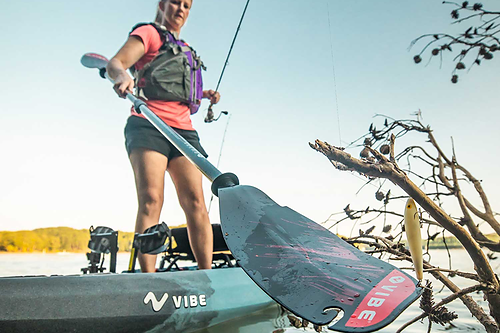
Choosing a carbon fiber paddle for kayak trips isn't just about spending more for the sake of it. Paddle material affects how heavy your paddle feels after hour three on the water, how much flex you get on every stroke, and how long the paddle lasts before it needs replacing. At Vibe Kayaks, we build and test paddles across all three major materials, and this guide breaks down exactly how a carbon fiber paddle for kayak use compares to fiberglass and aluminum, so you can buy with confidence instead of guesswork.
If you're still working on the fundamentals, our guide on how to paddle a kayak covers stroke technique and sizing basics that pair well with the material breakdown below.
Why Paddle Material Matters More Than You'd Think
A paddle is the one piece of gear your body interacts with on every single stroke, hundreds of times per trip. Material affects three things directly:
-
Swing weight – How heavy the paddle feels in motion, not just at rest
-
Flex and energy transfer –How much power is lost to a bending shaft
-
Long-term durability – How the paddle holds up to sun, salt, and impact
Carbon Fiber Paddles: The Performance Choice
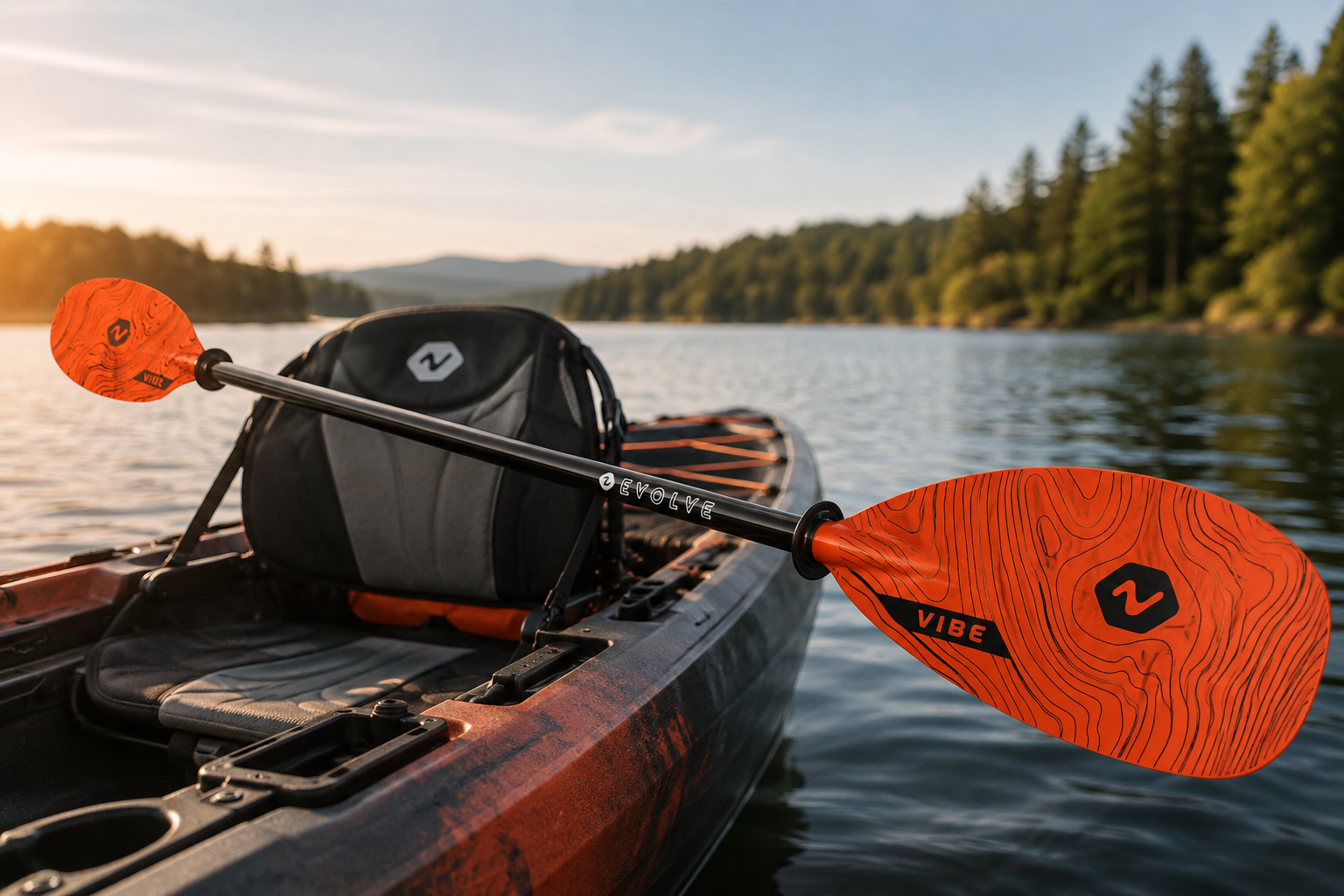
A carbon kayak paddle is the lightest option available, often weighing 30-40% less than an aluminum equivalent. That weight savings matters most on longer trips or when paddling upstream, since a lighter swing weight directly reduces shoulder and forearm fatigue over hundreds of strokes.
Carbon shafts are also stiffer, meaning more of your stroke energy moves the kayak forward instead of flexing the shaft. The trade-off is price: carbon paddles typically cost more than fiberglass or aluminum, and while modern carbon is impact-resistant, it can be more brittle than aluminum under a hard direct strike against rock.
Best for: Anglers and paddlers who cover long distances, stand-up casters who want reduced arm fatigue, and anyone prioritizing performance over upfront cost.
Fiberglass Paddles: The Balanced Middle Ground
A fiberglass paddle sits between carbon and aluminum on nearly every metric. It's noticeably lighter than aluminum, offers good stiffness for efficient strokes, and typically costs less than full carbon construction.
Fiberglass also tends to have a bit more flex than carbon, which some paddlers actually prefer, since it absorbs shock more comfortably during aggressive paddling or choppy water. Durability is solid for regular recreational and fishing use, though not quite as scratch- and impact-resistant as aluminum.
Best for: Paddlers who want a meaningful weight upgrade from aluminum without paying full carbon pricing, and anyone who fishes or paddles several times a month.
Aluminum Paddles: The Budget-Friendly Workhorse
Aluminum paddles are the heaviest of the three, but they're also the most affordable and the toughest against dings, drops, and rocky launches. If you're new to kayaking, paddle infrequently, or want a reliable backup paddle, aluminum is a practical starting point.
The added weight becomes more noticeable on longer paddling days, and the flex characteristics are generally less efficient than fiberglass or carbon, but for casual use, that trade-off is often worth the lower price.
Best for: beginners, backup paddles, rental fleets, and budget-conscious buyers who paddle occasionally.
Carbon vs Fiberglass vs Aluminum: Quick Comparison

How to Choose the Best Kayak Paddle Material for You
When browsing kayak paddles for sale, match the material to how often and how far you actually paddle:
-
Paddling a few times a season → Aluminum is fine and saves money
-
Paddling weekly or fishing full-day trips → Fiberglass offers the best value upgrade
-
Paddling long distances or standing to cast frequently → Carbon pays off in reduced fatigue
If you're deciding between buying a kayak bundled with a paddle or upgrading the paddle separately, our comparison on kayak with paddles vs buying a paddle separately walks through the cost and performance trade-offs in more detail.
Material is only half the equation, though. Even the best carbon kayak paddle will feel wrong if it's the wrong size for you and your boat. Before you buy, check our kayak paddle length guide to make sure you're pairing the right material with the right size.
Final Thoughts
There's no single best kayak paddle material for every paddler, only the best fit for how and how often you're on the water. Aluminum keeps costs down for casual use, fiberglass offers a strong middle ground for regular paddlers, and a carbon fiber paddle for kayak trips delivers the lightest, most efficient option for anglers and paddlers covering serious distance. Browse our full range of kayak paddles for sale to compare carbon, fiberglass, and aluminum models side by side.
Questions fréquemment posées
1. Is a carbon fiber paddle worth it for kayaking?
Yes, for paddlers who cover long distances or paddle frequently. The reduced swing weight lowers fatigue significantly over a full day, though casual paddlers may not notice enough benefit to justify the higher price.
2. What is the best kayak paddle material for fishing?
Fiberglass is a strong all-around choice for most anglers, balancing weight and cost. Anglers who stand frequently to cast or paddle long distances to reach fishing spots often prefer the added weight savings of a carbon kayak paddle.
3. Are aluminum kayak paddles bad?
No, aluminum paddles are a practical, durable, and affordable option, especially for beginners or as a backup paddle. They're simply heavier than fiberglass or carbon alternatives.
4. How much lighter is a carbon paddle than aluminum?
Carbon paddles are typically 30-40% lighter than comparable aluminum paddles, which makes a noticeable difference in fatigue over a multi-hour paddling session.
5. Do fiberglass paddles break easily?
Fiberglass paddles are reasonably durable for normal recreational and fishing use, though they are more prone to cracking under a hard direct impact than aluminum, and slightly less impact-resistant than carbon under a glancing strike.
 Satisfait ou remboursé sous 30 jours
 Boutique en ligne sécurisée et certifiée
 Plus de 1000 clients satisfaits