
The Health Benefits of Kayak Fishing: What the Research Actually Says
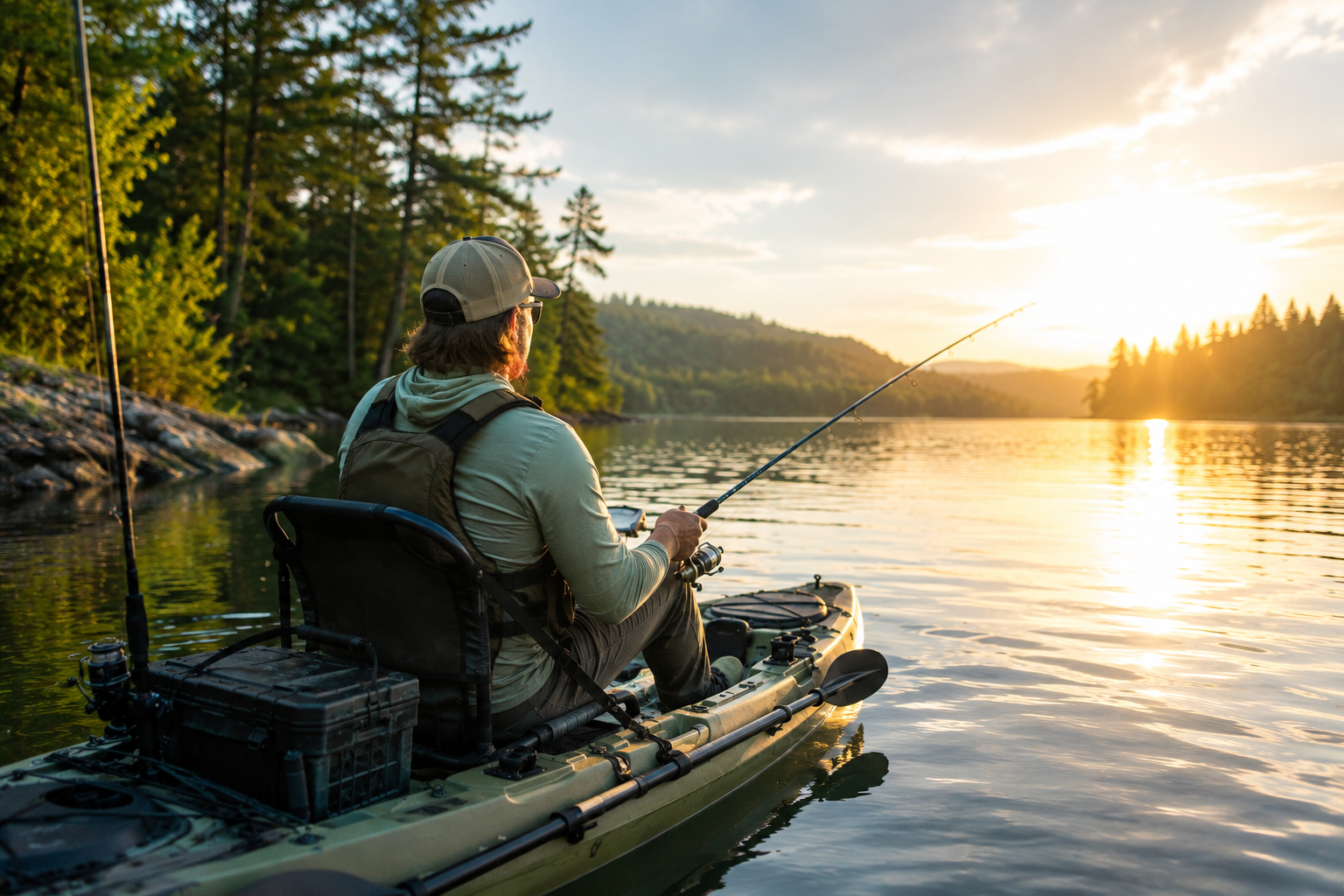
Kayak fishing gets talked about as a hobby, a way to unwind, or a reason to buy new gear but there's real research behind why it also happens to be good for you. From lower blood pressure to a genuine calorie burn, the benefits go well beyond "it's relaxing." Here's what the science actually says about kayak fishing and your physical, mental, and emotional health.
Nature Itself is Doing More Than You Think
Time spent in natural settings has a measurable effect on the body, and it isn't just anecdotal. A 2023 review published in the American Journal of Lifestyle Medicine found that time in forests and other green spaces is consistently linked to lower blood pressure, a lower prevalence of hypertension, and reduced need for blood pressure medication in people who spend regular time outdoors (source). Since kayak fishing puts you directly on the water, often surrounded by shoreline, trees, and wildlife, it checks the same boxes researchers are studying when they talk about "green space" exposure.
You Don't Need Hours on the Water to Benefit
One of the more surprising findings in this research is how little time it takes to see a benefit. A widely cited study in Scientific Reports tracked nearly 1,500 people and found that as little as 30 minutes in green or blue space per week was associated with measurably lower rates of depression and high blood pressure across the study population (source). A single morning kayak fishing trip likely clears that bar on its own, which makes it a realistic health habit rather than one more thing to squeeze into an already packed schedule.
Kayak Fishing Is a Legitimate Workout, Not Just a Float
Paddling works your shoulders, back, core, and arms with every stroke, and the numbers back up that it's a real workout, not a lazy afternoon. According to the American Council on Exercise, a 150-pound person burns roughly 300 calories per hour kayaking, putting it in the same range as cross-country skiing or step aerobics (source). Standing to sight-cast, paddling out to your spot, and fighting a fish all add up over a few hours on the water, and pedal-drive setups add a leg workout on top of that.
Sunlight Does More Than Improve Your Mood
Morning sunlight exposure — something almost every kayak angler gets plenty of plays a direct role in regulating your circadian rhythm, the internal clock that governs sleep quality and daytime alertness. UCLA Health notes that daily natural light exposure, particularly earlier in the day, helps keep that internal clock aligned, which in turn supports better sleep and more stable energy levels (source). It's a benefit that's easy to overlook, since most anglers head out early simply because that's when the fish are biting.
What You Catch Can Be Good for You, Too
For anglers who keep their catch, fish is genuinely one of the better proteins you can eat. The American Heart Association recommends at least two servings of fish per week as part of a heart-healthy diet, largely because of the omega-3 fatty acids found in species like salmon and trout, which are linked to better cardiovascular health (source). If you fish waters with known contamination advisories, it's worth checking local guidance, since mercury and other contaminants can offset the benefits in certain freshwater species — something worth being especially mindful of if you're pregnant, nursing, or fishing with kids.
The Social Side Shouldn't Be Overlooked
Beyond the physical numbers, kayak fishing tends to build genuine communities. Local paddling groups, fishing tournaments, and the simple habit of trading notes with other anglers at the launch all create the kind of regular social connection that's tied to better long-term health outcomes, from faster physical recovery to a stronger sense of purpose. Whether you fish solo for the quiet or paddle out with friends for company, both versions of the hobby offer something a gym membership doesn't.
Getting the Most Out of It
None of these benefits require an aggressive new fitness routine. They come from doing something you were probably already planning to do anyway. A stable, comfortable kayak makes it easier to actually get those benefits regularly: a hull that lets you stand confidently to fish encourages more movement per trip, and a pedal-drive kayak can turn a paddling session into a genuine leg workout when you want one. If you're kayak shopping with health benefits in mind as much as fishing performance, our guide to the most stable fishing kayaks of 2026 is a good place to start.
Questions fréquemment posées
1. Is kayak fishing good exercise?
Yes. A 150-pound person burns approximately 300 calories per hour kayaking, according to the American Council on Exercise, a rate comparable to cross-country skiing or step aerobics. Paddling engages the shoulders, back, core, and arms, and pedal-drive kayaks add a leg workout as well.
2. Can kayak fishing help lower blood pressure?
Research suggests it can contribute. Studies on time spent in green and blue spaces have found associations with lower blood pressure and reduced hypertension prevalence, with measurable benefits reported from as little as 30 minutes of outdoor time per week.
3. How much time on the water do you need to see health benefits?
Research points to roughly 30 minutes per week as a starting benchmark for measurable mental health and blood pressure benefits, meaning even a single short kayak fishing trip can meaningfully contribute.
4. Is eating the fish you catch actually healthy?
Generally, yes, in moderation. The American Heart Association recommends at least two servings of fish per week for heart health due to their omega-3 content. Anglers should still check local fish consumption advisories, since mercury levels vary by species and location.

 Satisfait ou remboursé sous 30 jours
 Boutique en ligne sécurisée et certifiée
 Plus de 1000 clients satisfaits