
Cling Mag Grab Net Rack vs Rod Rack: Which Magnetic Mount Fits Your Kayak?
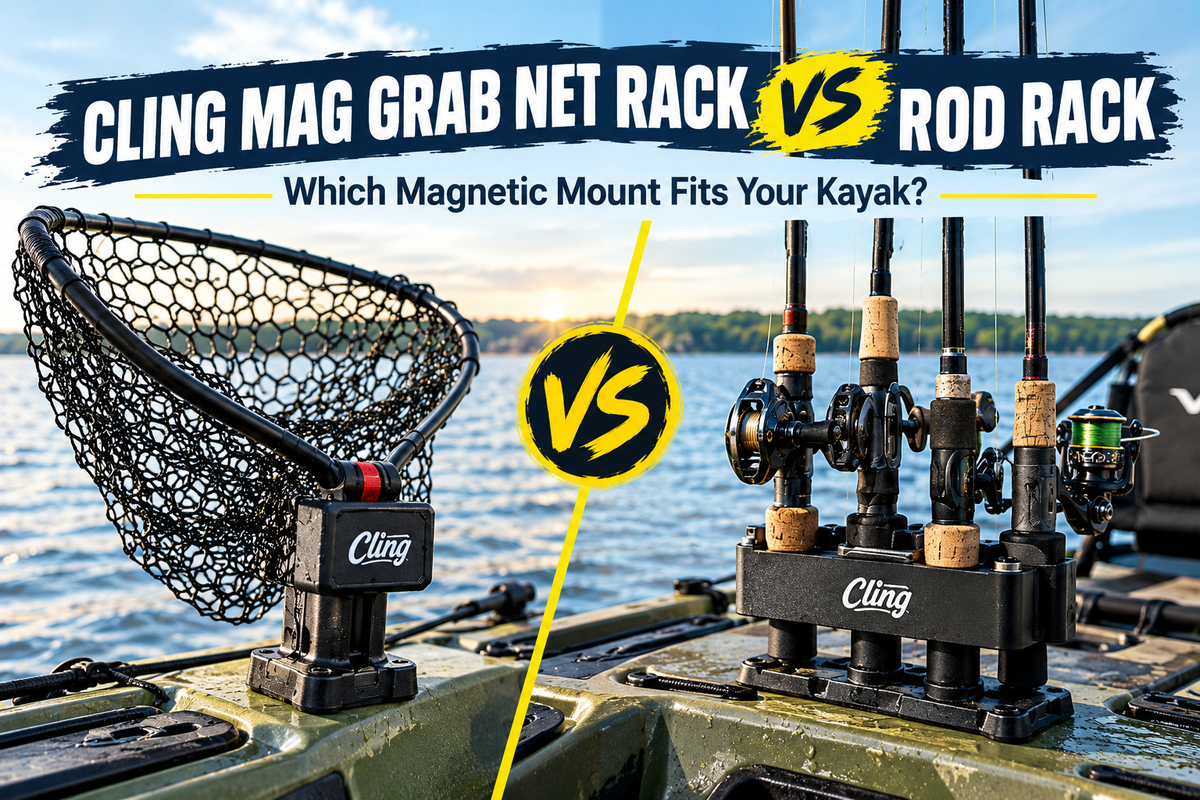
If you fish from a kayak, you already know that deck space is the most valuable real estate on your boat. That's exactly why the Cling Mag Grab Net Rack and its sibling, the Cling Mag Grab Rod Rack, have become two of the most talked-about accessories among kayak anglers this season. Both use powerful magnetic kayak mounts to keep your gear within arm's reach, but they're built for very different jobs. In this guide, we'll break down how each rack works, where it performs best, and how to decide which one (or both) belongs on your kayak.
What is the Cling Mag Grab Net Rack?
The Cling Mag Grab Net Rack is designed specifically to hold your landing net securely against your kayak's hull or tankwell, without drilling holes or adding bulky hardware. It uses a high-strength magnetic base paired with a cradle-style grip that holds the net handle firmly in place, even through choppy water, sharp turns, or a sudden fish strike.
For anglers who fight fish close to the kayak, having a net ready to deploy in seconds can be the difference between landing a trophy catch and watching it swim away. The net rack keeps your hands free during the retrieve and eliminates the annoyance of a net sliding around your feet or tangling with your paddle.
Key Benefits of the Net Rack
-
Quick-release magnetic hold for one-handed net access
-
No drilling or permanent mounting required
-
Keeps the cockpit clear and organized
-
Works on most kayak hull materials and tankwell edges
-
Reduces net-related tangles during a fight
What is the Cling Mag Grab Rod Rack?
While the net rack manages your landing gear, the Cling Mag Grab Rod Rack is built to secure your fishing rods. It's part of the broader lineup of Cling fishing products engineered around the same magnetic mounting system, so the two racks share the same reliable hold and easy install process, just adapted for a rod's shape and weight distribution.
The rod rack cradles the rod blank or handle, keeping it stable during paddling, trolling, or when you're switching between setups. This is especially useful for anglers running multiple rods with different lures or rigs, since it cuts down on the time spent digging through rod holders or loose gear straps.
Key Benefits of the Rod Rack
-
Stable, vibration-resistant grip for rods of various sizes
-
Fast access when switching lures or techniques
-
Frees up traditional rod holders for active fishing
-
Prevents rod roll-off during waves or sudden movement
-
Complements existing kayak rigging without modification
Key Differences Between Net Rack and Rod Rack
1. Mounting and Placement
Both mounts rely on the same magnetic technology, but placement differs. The net rack typically sits near the cockpit or tankwell for fast net grabs, while the rod rack is often mounted along the side rail or gunwale, closer to where you naturally reach for a rod. Correct mounting tips matter here, since even a strong magnet performs best when positioned on a flat, stable surface.
2. Holding Power and Weight Capacity
A landing net is lightweight and bulky, so the net rack's cradle design focuses on grip stability during motion. A rod, by contrast, is longer and unevenly weighted, so the rod rack's magnetic base is tuned to resist rolling and sliding along its length.
3. Best Use Cases
-
Choose the net rack if you frequently land fish solo and need instant net access.
-
Choose the rod rack if you run multiple rods and switch presentations often.
-
Many anglers running a full spread of Cling fishing products end up using both, since they solve different on-water problems rather than competing with each other.
Why Magnetic Kayak Mounts Are Trending in 2026
Magnetic kayak mounts have surged in popularity because they solve a real problem: traditional bolt-on accessories damage the hull, limit flexibility, and are hard to reposition. Anglers today want modular setups they can adjust based on the trip, whether that's inshore, freshwater, or fly fishing. This shift toward tool-free, repositionable rigging is part of a broader trend in kayak fishing gear, and it's why magnetic fly patch accessories and grab-style holders have become staples in tackle setups documented in recent magnetic fishing gear roundups.
Which One Should You Choose?
If you had to pick just one, think about your fishing style. Anglers who prioritize landing fish cleanly should start with the net rack. Anglers running multiple rigs throughout the day will get more daily use out of the rod rack. For most kayak anglers, though, combining both racks creates a cleaner, faster, and safer deck setup, and it's worth reviewing top gear picks for 2026 to see how other anglers are building out their systems.
FAQ
1. Is the Cling Mag Grab Net Rack strong enough for rough water?
Yes. The magnetic base is designed to hold securely through normal kayak movement, including waves and quick turns, though it's still good practice to check the mount periodically during long trips.
2. Can I use the Net Rack and Rod Rack together on the same kayak?
Absolutely. They're designed as complementary magnetic kayak mounts, so pairing them lets you manage both your rods and your net without cluttering the cockpit.
3. Do I need to drill holes to install these racks?
No. Both racks use magnetic mounting, so there's no drilling or permanent modification to your kayak.
4. Which rack is better for beginners?
The net rack is often the easier starting point, since it directly improves the landing process, which is one of the most common pain points for new kayak anglers.
5. Are these racks compatible with all kayak brands?
They work on most hulls and tankwells with a flat magnetic contact surface. If you're unsure about your specific kayak, checking a detailed setup and placement guide before installing is a good next step.

 Satisfait ou remboursé sous 30 jours
 Boutique en ligne sécurisée et certifiée
 Plus de 1000 clients satisfaits